

Getting a kids closet under control can feel like a never-ending battle. Between outgrown clothes, scattered shoes, and toys that migrate from the playroom, it’s a space nobody wants to open. This constant chaos makes effective kids closet organization feel impossible. But what if you didn’t have to start over every year? We’ve gathered the best kids closet ideas and children’s closet design tips to help you create a space that adapts as they grow. This is about a long-term solution that saves you time and stress through every stage.
Need help organizing your child’s closet? Book a free in-home consultation with Creative Closets and see a custom 3D design for your space.
The good news? A well-organized kids closet does not have to be complicated. With the right layout, age-appropriate features, and a system your child can actually use, you can create a space that stays tidy and adapts as your child grows from toddler to teenager.
In this guide, we share practical kids closet organization ideas that work for real families. Whether you are dealing with a small reach-in closet or a spacious walk-in, these strategies will help you maximize every inch and teach your child lifelong organization habits.
If your child’s room has no built-in closet, see our guide to closet solutions for rooms without closets for freestanding and wall-mounted alternatives.
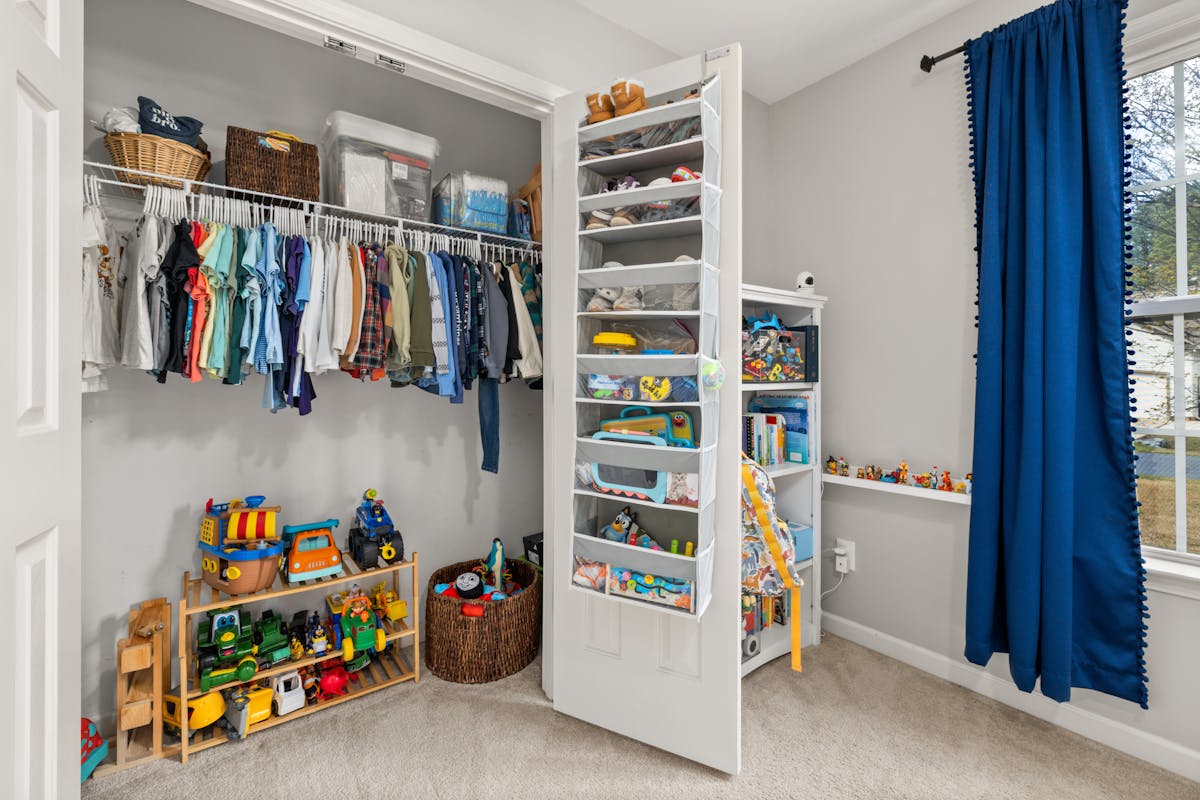
Does Kids Closet Organization Really Matter?
A disorganized closet is more than an eyesore. It creates daily stress for both parents and children, especially during busy school mornings.
Benefits of an organized kids closet:
- Faster morning routines. When everything has a place, kids can find what they need without help. That means fewer meltdowns and less scrambling before school.
- Teaches responsibility. Children who can reach their own clothes and put them away develop independence and life skills earlier.
- Protects clothing investment. Properly stored clothes last longer and stay in better condition for hand-me-downs or resale.
- Reduces clutter throughout the house. A closet that works keeps items contained instead of scattered across bedrooms and hallways.
- Grows with your child. Custom closet systems with adjustable shelving adapt as your child’s needs change, so you invest once instead of reorganizing every year.
Finding Inspiration for Your Kids Closet
Before you start pulling everything out of the closet, it helps to have a vision for the finished space. Seeing what’s possible can turn an overwhelming task into an exciting project. A great first step is to browse different designs to figure out what you like and what will work for your child’s room and routine. You can find endless ideas online that show how to organize everything from clothes to toys in a way that looks great and is easy for kids to maintain. Looking at examples in a closet gallery can also help you pinpoint specific features you’d want in a custom design, making the conversation with a professional designer even more productive.
Gathering Ideas from Pinterest and Instagram
Visual platforms like Pinterest and Instagram are fantastic resources for sparking your imagination. You can search for “kid closet ideas” and find thousands of photos showing clever layouts for every age, from toddlers to teenagers. As you scroll, pay attention to designs that foster independence. A well-designed kids closet with low-hanging rods, accessible drawers, and open bins empowers your child to pick out their own outfits and, more importantly, put them away. This simple change encourages them to take ownership of their space and builds helpful habits early on.
Beyond functionality, think about making the closet a fun and inviting part of their room. Many of the designs you’ll find incorporate playful elements that make organization feel less like a chore. Consider adding colorful baskets for toys, fun patterns on the wall, or unique closet hardware on the drawers. These small touches can transform a standard closet into a personalized space your child will actually enjoy using. By gathering these ideas, you can create a plan for a closet that is not only tidy but also a true reflection of your child’s personality.
Your First Step: A Total Closet Cleanout
Before you organize anything, you need to see what you are working with. A thorough cleanout is the foundation of every successful closet project.
Step-by-step cleanout process:
- Remove everything. Pull every item out of the closet, including clothes, shoes, bags, toys, and anything else hiding in there.
- Sort into categories. Create four piles: keep, donate, store (seasonal or sentimental), and toss.
- Check sizes ruthlessly. Kids outgrow clothes fast. If it does not fit right now or within the next season, it goes.
- Clean the closet. Wipe down shelves, vacuum the floor, and check for any repairs needed.
- Measure the space. Before buying any organizers or planning a custom closet design, measure the closet dimensions including height, width, and depth.
Pro tip: Do the cleanout with your child if they are old enough (age 5 and up). It helps them learn to make decisions about their belongings and builds buy-in for keeping the new system organized.
Designing for Safety and Accessibility
When planning your child’s closet, organization is only half the story. A truly functional space must also be safe and accessible for little ones. A thoughtful design not only prevents bumps, bruises, and bigger accidents but also empowers your child to use the closet independently. By putting everyday items within their grasp and building in key safety measures, you create a system that helps them learn responsibility. This approach transforms the closet from a potential hazard zone into a tool for building confidence and good habits from an early age.
Safety-First Features
A kid-friendly closet anticipates how a child will interact with the space—which often includes climbing, pulling, and exploring. Building safety into the core design is non-negotiable. This means looking beyond aesthetics to the structural integrity and small details that make a big difference. From the shape of the corners to the stability of each component, every element should be chosen with your child’s well-being in mind. Professional systems are often designed to meet these standards, giving you peace of mind that the space is secure.
Prioritizing Rounded Edges and Secured Shelving
Sharp corners have no place in a child’s room, and the closet is no exception. Opting for components with smooth, rounded edges can prevent unnecessary injuries during playtime or while getting dressed. Equally important is the stability of the shelving. Children might be tempted to pull on or climb shelves, so it’s essential that they are securely fastened and lock into place. This prevents them from being accidentally pulled out, ensuring the entire structure remains stable and safe for your child to be around, even without direct supervision. Secure closet shelving is a fundamental part of a safe design.
Ensuring Full Drawer and Basket Clearance
In smaller reach-in closets, it’s easy to overlook how drawers and baskets will function once installed. A common mistake is placing them too close to a side wall or door frame, preventing them from opening fully. This isn’t just an inconvenience; it can be a safety hazard. A partially opened drawer can create a pinch point for little fingers, and the frustration of a stuck basket might lead a child to yank on it forcefully. Ensuring every drawer and basket has full clearance is a critical detail for both safety and usability.
Making Everything Reachable
The ultimate goal of an organized kids closet is to create a system they can use themselves. If your child can’t reach their clothes or put away their shoes, the responsibility for tidiness will always fall back on you. Designing for accessibility fosters independence and teaches valuable life skills. By placing rods, shelves, and hooks at a kid-friendly height, you empower them to pick out their own outfits and, more importantly, put their laundry away. This simple adjustment makes a huge difference in their daily routine and your own. An accessible closet is a sustainable one that works for everyone in the family.
Using a Stool for Higher Shelves
To encourage independence, place your child’s daily items within their natural reach. For a shared closet, this might mean giving the youngest child the lowest drawers and hanging space. For items stored a bit higher, a sturdy, non-slip stool gives them the ability to access things safely on their own. This simple addition helps them learn to be responsible for their belongings. As they grow, an adjustable kids closet system allows you to move rods and shelves upward, adapting the space to their changing needs without a complete overhaul.
Closet Organization Ideas for Every Age
What works for a toddler will not work for a teenager. The best kids closet organization ideas account for your child’s age, size, and developmental stage.
For Toddlers & Preschoolers (Ages 1-4)
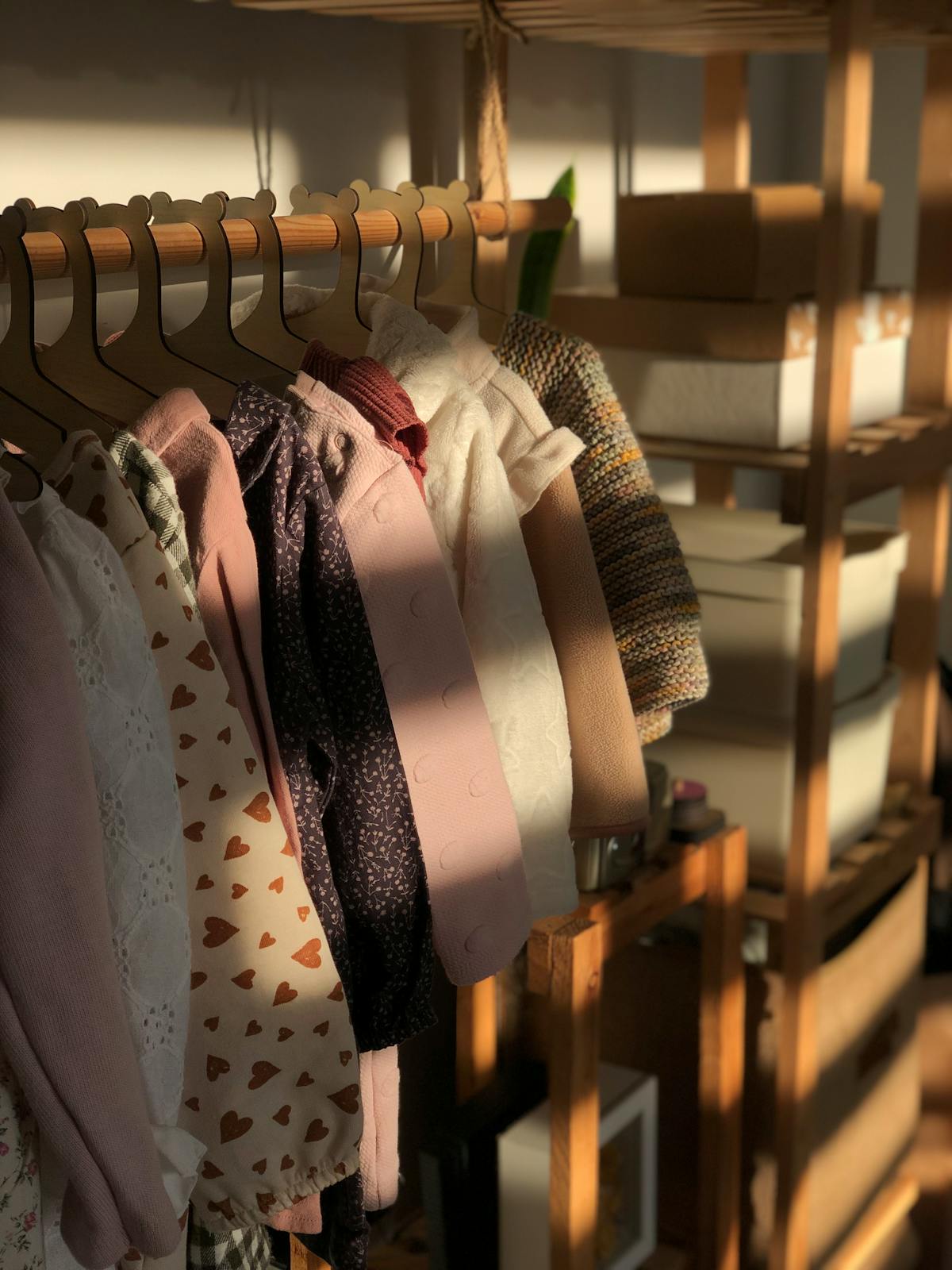
At this age, the priority is accessibility. Your child is just starting to learn independence, so everything they need daily should be within their reach.
- Lower the hanging rod to 24 to 30 inches from the floor so toddlers can reach their own clothes.
- Add a second rod above at standard height for parent-access items like dress clothes and out-of-season gear.
- Use picture labels on bins and drawers so pre-readers know where things go.
- Keep daily essentials at the bottom. Shoes, socks, and everyday play clothes should be at floor level.
- Minimize choices. Too many options overwhelm young children. Curate 5 to 7 outfit options and rotate weekly.
Storing a Few Favorite Toys on Low Shelves
It’s natural for a few favorite toys to find their way into the bedroom closet. Instead of fighting it, use this to your advantage. Designate a low, open shelf for a small, curated selection of your child’s most-loved toys. This makes playtime accessible and encourages them to grab what they want without needing your help. More importantly, it teaches them where those toys belong when they’re finished playing. By keeping just a few items here, you avoid the overwhelming clutter of a toy box, making cleanup less of a chore. A custom closet shelving system can be designed with this in mind, creating a dedicated, easy-to-reach spot that keeps toys off the floor and contained.
For Elementary Kids (Ages 5-10)
Kids this age are capable of maintaining their own closet with the right setup and some coaching.
- Raise the hanging rod to about 40 to 48 inches as they grow taller.
- Add closet drawers for folded items. Drawers work better than shelves for this age group because items stay contained.
- Create zones. Dedicate specific areas for school clothes, play clothes, sports gear, and accessories.
- Use shelf dividers to prevent stacks of folded clothes from toppling over.
- Include a hamper inside the closet so dirty clothes go directly where they belong.
For Tweens & Teens (Ages 11+)
Teenagers have strong opinions about their space. Involve them in the design process for the best results.
- Maximize vertical space. Teens accumulate more clothing, so use the full height of the closet with double-hang sections and adjustable shelving.
- Add specialty storage. Hooks for bags and hats, pull-out baskets for accessories, and shoe racks for growing collections.
- Consider a wardrobe closet system if the existing closet is too small for a teen’s wardrobe.
- Include a mirror and small vanity area if space allows. Teens appreciate having a getting-ready station.
- Let them choose colors and finishes. When kids feel ownership of the space, they are more likely to maintain it.
Small Kids Closet? Try These Space-Saving Ideas
Not every home has spacious walk-in closets, especially in older homes throughout King and Pierce Counties. A small reach-in closet can still be highly functional with the right approach.
If your child’s room has no closet at all, explore our guide to closet solutions for rooms without closets for creative alternatives that work in any space.
Space-maximizing strategies:
- Go vertical. Use the full height of the closet. Most reach-in closets have unused space above and below the standard rod.
- Double-hang where possible. Kids clothes are shorter than adults, so two hanging rods often fit where one normally goes.
- Use the door. Over-the-door organizers add storage for shoes, accessories, and small items without taking up closet space.
- Add narrow shelving. Even 6-inch-deep shelves along a side wall can hold shoes, folded jeans, or bins of accessories.
- Replace wire shelving. Builder-grade wire shelving wastes space and lets small items fall through. A built-in closet system uses every inch more efficiently.
- Use bins and baskets strategically. Matching containers on shelves create a clean look while hiding the visual clutter that is inevitable with kids.
Fold More, Hang Less
Hanging every piece of clothing might seem organized, but it’s often an inefficient use of space in a child’s closet. Folding clothes on shelves or in drawers allows you to fit more items than hanging them, making it a practical choice for maximizing a small space. T-shirts, pajamas, shorts, and leggings don’t wrinkle easily and are perfect candidates for folding. This strategy frees up precious rod space for items that truly need it, like dresses, button-down shirts, and jackets. By incorporating deep closet drawers or sturdy shelving into your design, you can create neat, accessible stacks that make it easy for kids to see their options and grab what they need without everything toppling over.
Use Thin Felt Hangers
One of the quickest ways to create more room on the hanging rod is to switch your hangers. Those bulky, mismatched plastic hangers that come from the store take up a surprising amount of space. Replacing thick plastic hangers with thin felt ones not only saves space but also keeps clothes looking neater. The non-slip felt surface is a game-changer, preventing silky dresses, tank tops, and wide-neck shirts from constantly sliding off and ending up in a pile on the floor. This simple swap instantly makes the closet look more uniform and streamlined, and you’ll be amazed at how many more items you can fit on the rod.
Consider Removing the Doors
If you’re dealing with a standard reach-in closet, the doors themselves might be part of the problem. Bifold or sliding doors often block access to half of the closet at any given time, making it difficult to see and reach everything inside. For better functionality, consider taking off the doors entirely. This opens up the space, making the entire closet visible and accessible at once. You can leave it open for a modern, built-in look or hang a curtain on a tension rod. A curtain is easy for kids to pull aside and can add a soft, decorative touch to the room, making the reach-in closet feel more integrated and user-friendly.
Store Some Items Outside the Closet
To truly optimize a child’s closet, think beyond its four walls. Not every item your child owns needs to live in their bedroom. Storing some things elsewhere can free up valuable space for daily essentials. For example, consider keeping backpacks and school gear in an entryway cabinet or mudroom. Everyday jackets can hang on hooks behind the bedroom door for easy access. Bulky seasonal items, like snow gear or summer-only clothes, can be packed in labeled bins and stored in a garage, attic, or basement. By strategically relocating these items, you reduce clutter in the primary closet, making it much easier for your child to manage their daily wardrobe.
What Every Organized Kids Closet Needs
The right features make the difference between a closet that looks good on day one and one that actually stays organized month after month.
Shelving That Grows With Them
Children grow fast, and their storage needs change constantly. Adjustable closet shelving lets you raise or lower shelves as your child grows taller and their wardrobe evolves. Fixed shelves often become wasted space within a year or two.
Using High Shelves for Parent-Access Items
The top shelf in a child’s closet is prime real estate, but it’s usually too high for them to reach. Instead of letting it collect dust, claim that space for yourself. This is the perfect spot to store items you need to control or access infrequently. Think about things like out-of-season clothing, special occasion outfits, or even extra supplies like diapers and wipes. By placing a second hanging rod up high or using the top shelf for bins, you can keep these parent-access items organized and out of the way. This strategy maximizes your closet storage while ensuring your child’s daily essentials remain at their level, promoting their independence without giving them access to everything.
Choosing the Right Shelf Depth
When planning your closet layout, the depth of your shelves is a detail that makes a huge impact. While standard shelves are often 12 inches deep, opting for 14-inch deep shelves can be a game-changer for keeping things tidy. That extra two inches provides just enough space to prevent bulky items like sweaters, sweatshirts, and stacks of jeans from hanging over the edge. This simple adjustment contains clothing neatly, making the entire closet look cleaner and more organized. When you design a custom system, specifying the right shelf depth ensures your storage is perfectly tailored to the types of clothes your child wears, preventing that constant, messy overflow.
Drawers and Baskets for Easy Access
Drawers are a game-changer for kids closets. They keep folded clothes, underwear, socks, and accessories contained and visible. Soft-close drawers prevent little fingers from getting pinched and add a premium feel to the closet.
Choosing the Right Baskets
Baskets are fantastic for grouping small items like socks, accessories, or little toys. Using matching containers on your closet shelving creates a clean, uniform look that instantly hides the visual clutter that comes with kids’ belongings. Before you purchase any, be sure to measure your shelf depth and height. This simple step ensures the baskets you select will fit perfectly and maximize your storage space without awkward gaps or overhangs. For children’s spaces, durability and safety are top priorities. Soft-sided felt or fabric bins are a great choice because they won’t snag clothes or pinch small fingers. It’s wise to avoid wicker, which can be scratchy and break apart over time. Also, consider visibility—choose baskets that are low enough for your child to peek inside without pulling the whole thing down, making it easier for them to find what they need and put it away.
Kid-Height Hooks and Pegs
Hooks at a child’s eye level create easy grab-and-go spots for jackets, backpacks, and robes. They are perfect for items that do not need folding or hanging and give kids a quick win when putting things away.
Smart Solutions for Storing Shoes
Kids accumulate shoes quickly. Dedicated shoe shelves, cubbies, or angled shoe racks keep pairs together and visible so your child can find the right shoes without digging through a pile.
Why Flat, Adjustable Shelves Work Best
Flat, adjustable shelves are the unsung heroes of a functional kids closet. Unlike fixed shelving, an adjustable system allows you to adapt the closet as your child shoots up in height. The shelf that once held tiny folded onesies can be moved up to make room for a second hanging rod, and later adjusted again for stacks of jeans. This flexibility ensures you are always making the most of the available space. We also recommend choosing shelves that are at least 14 inches deep. This extra depth prevents bulky sweaters and pants from spilling over the edge, keeping the closet looking tidy. By folding more items on these sturdy, flat surfaces, you can often fit more clothing than you could on hangers, making them a smart choice for any kids closet.
Labeled Bins to End the Guesswork
Labels turn chaos into a system. Use printed labels for readers and picture labels for younger children. Color-coded bins can also designate categories: blue for sports gear, green for school supplies, red for dress-up clothes.
How to Organize a Shared Closet for Siblings
When two or more children share a closet, clear boundaries and smart design keep the peace.
Tips for organizing a shared kids closet:
- Divide the space equally. Give each child their own section with a clear visual divider such as a vertical panel or a different shelf color.
- Use color coding. Assign each child a color for bins, hangers, and labels so there is no confusion about whose items are whose.
- Keep everyday items accessible to both. Shared supplies like craft materials or board games go in a neutral zone.
- Double the hanging space. With two children’s wardrobes in one closet, double-hang configurations are essential.
- Schedule regular cleanouts together. Quarterly purges prevent the closet from becoming overstuffed.
Creating Zones for Each Child
When siblings share a closet, the secret to harmony is creating clear, individual zones. This isn’t just about preventing arguments over space; it’s about giving each child ownership and teaching them to manage their own belongings. The most effective way to do this is with a physical divider, like a vertical panel that splits the closet into two distinct halves. A custom kids closet can be designed with these built-in dividers from the start. You can also assign each child a specific color for their hangers, bins, and labels. This simple visual cue makes it instantly clear whose stuff is whose, empowering even young children to find their clothes and, more importantly, put them away in the right spot.
A Simple System for Rotating Seasonal Clothes
Washington families know that kids need different wardrobes for rainy winters and warm summers. Seasonal rotation keeps the active closet manageable.
How to handle seasonal clothing:
- Keep only the current season in the closet. Off-season clothes go into labeled bins stored on high shelves, under beds, or in a separate storage area.
- Use vacuum-seal bags for bulky winter coats and snow gear to save shelf space.
- Swap seasons on a schedule. Mark your calendar for April and October swaps. During each swap, do a size check and remove anything outgrown.
- Store special occasion clothing separately. Holiday outfits and formal wear that are rarely worn should not take up prime closet real estate.
- Label everything clearly. Include the child’s name, size range, and season on each storage container so you can find what you need without opening every bin.
Custom vs. Pre-Made: Which Closet System is Best?
When it is time to invest in a real closet system, you have two main paths: DIY store-bought solutions or a professional custom design.
| Feature | DIY Store-Bought | Custom Professional |
|---|---|---|
| Cost | $100 to $500 | $800 to $2,500+ |
| Fit | Standard sizes, may not fit your space perfectly | Designed precisely for your closet dimensions |
| Adjustability | Limited; often fixed positions | Fully adjustable to grow with your child |
| Materials | Laminate or wire | Real wood with dozens of color options |
| Installation | Self-install, may take a full weekend | Professional 1-day installation |
| Warranty | 1 to 5 years | Lifetime warranty on materials and workmanship |
| Resale value | Minimal | Increases home value |
For families who want a system that genuinely grows with their child and adds value to their home, a custom solution is the stronger long-term investment. Creative Closets designs kids closet systems during a free in-home consultation where you see your design in 3D before committing.
Considering Popular Pre-Made Systems
Pre-made closet systems, the kind you find at major retailers, can be a convenient solution for organizing a child’s space. Their main appeal is flexibility, as many modular designs let you reconfigure shelves and rods as your child grows. When looking at these options, prioritize systems with adjustable shelving. Fixed shelves can quickly lead to wasted space as your child gets taller and their clothes get longer. Another essential feature is the inclusion of drawers and baskets. They are game-changers for keeping smaller items like socks, underwear, and accessories contained and easy for kids to find, which is key to helping them maintain the space themselves. Having dedicated closet drawers makes a huge difference in preventing clutter and teaching kids responsibility.
How to Keep a Kids Closet Organized for Good
Organization is not a one-time event. These habits keep the system working long-term.
- Build a daily routine. Spend 2 minutes each evening putting clothes away. Make it part of the bedtime routine.
- Do a weekly reset. Once a week, straighten shelves, return misplaced items, and toss anything in the donate bag.
- The one-in-one-out rule. When a new item comes in, an old item goes out. This is especially important with kids who get new clothes regularly from grandparents and friends.
- Praise the effort, not perfection. Young children will not fold clothes perfectly, and that is fine. The goal is building the habit of putting things in the right place.
- Reassess quarterly. Every three months, check for outgrown clothes, broken organizers, or zones that are not working. Adjust the system as needed.
- Keep it simple. The more complicated the system, the less likely your child will maintain it. Fewer categories with clear boundaries beat elaborate sorting schemes.
Frequently Asked Questions
What is the best age to start organizing a kids closet?
You can start as early as 18 months by placing a low basket for shoes and hooks at toddler height. By age 3, most children can be taught to hang up jackets and put shoes in a designated spot. The key is making everything accessible at their height.
How often should I reorganize my child’s closet?
Plan a major reorganization at least twice a year during seasonal clothing swaps in spring and fall. Do a quick size check monthly for fast-growing toddlers and preschoolers, and quarterly for older children.
How do I organize a very small kids closet?
Focus on vertical space and double-hanging configurations. Remove anything not needed daily, use the closet door for extra storage, and consider a custom reach-in closet system designed to maximize every inch of your specific space.
Should I use hangers or fold clothes for kids?
A mix works best. Hang items that wrinkle easily like dresses, button-downs, and jackets. Fold t-shirts, pants, pajamas, and casual wear into drawers or on shelves. For young children, folding into drawers is often easier than using hangers.
How do I get my child to keep their closet organized?
Make the system match their ability level. Lower rods and open bins for young children, labeled zones for school-age kids, and give teens freedom to customize their space. When kids can actually use the system independently, they are far more likely to maintain it.
What is the most important feature in a kids closet?
Adjustability. Children’s needs change rapidly, and a closet with fixed shelves and a single rod will not keep up. Systems with adjustable shelving and reconfigurable components adapt from toddler to teen without a complete overhaul.
How much does a custom kids closet cost?
A custom kids closet typically ranges from $800 to $2,500 depending on the closet size, materials, and accessories. This includes professional design, all materials, and 1-day installation with a lifetime warranty. Schedule a free consultation to get an exact quote for your space.
Can a kids closet system increase my home’s value?
Yes. Custom closet systems are one of the top home improvements for return on investment. Buyers in King and Pierce Counties consistently list organization and storage as top priorities when shopping for homes. A professionally designed closet system signals a well-maintained home.
Ready to transform your child’s closet into an organized space that grows with them? Creative Closets has been designing custom storage solutions for Washington families for over 20 years. Book your free in-home consultation and see your child’s new closet in 3D before you commit. No obligation, no pressure, just expert advice from a local family-owned business.
Extend Organization Habits Beyond the Closet
A disorganized closet is more than an eyesore; it creates daily stress for both parents and children, especially during busy school mornings. When you create a system inside the closet, you are teaching your child valuable life skills that extend to the rest of their room. The same principles of sorting, categorizing, and putting things away can be applied to toy bins, bookshelves, and homework stations. By starting with the closet, you create a ripple effect of tidiness, empowering your child to take ownership of their entire space and reducing clutter throughout the home. This foundation helps them understand that an organized environment is calmer and more functional.
Making the Closet a Fun Space
Let’s be honest: for most kids, organizing is a chore. The secret to getting them on board is to make their closet a space they actually want to spend time in. Instead of a dark, boring box, think of the closet as a mini-extension of their bedroom, full of personality and fun touches. When a child feels like the space is truly theirs, they are far more motivated to keep it tidy. It stops being about following rules and starts being about taking care of something they love. This shift in perspective is key to building lasting habits that stick.
Transforming the closet from a purely functional area into an enjoyable one does not require a massive overhaul. Simple changes can make a huge impact on your child’s willingness to participate in organization. By adding pops of their favorite colors, unique hardware, and smart lighting, you can create an environment that feels welcoming and exciting. These personal touches make the daily routines of choosing an outfit or putting away laundry feel less like a task and more like an activity they can take pride in. It’s all about making the space inviting and interactive for them.
Add a Pop of Color and Personality
One of the easiest ways to make a closet more inviting is to infuse it with color. You can paint or wallpaper the back wall with a fun pattern, use colorful baskets, or let your child pick out bright handles for their drawers. These small details make the space feel custom and special. When you design a closet system, you can even mix up drawer front styles or choose from a wide range of finishes to match your child’s unique taste. Adding colorful hooks for bags or small chalkboards for labels also makes organizing more enjoyable and interactive for them.
Incorporate Smart Lighting
Good lighting is important, especially in a child’s closet. A well-lit space makes it easy to see everything, which means fewer cries of “I can’t find my other shoe!” Motion-sensor LED lights are a fantastic addition because they turn on automatically when the door opens, making the closet feel more accessible and less like a dark cave. These lights are energy-efficient, cool to the touch, and add a modern, high-tech feel that kids love. It is a simple upgrade that dramatically improves the closet’s functionality and makes finding what they need a breeze, especially on dark mornings.
Beyond Clothes: Creative Uses for a Kids Closet
In many homes, especially those with smaller bedrooms, every square foot counts. A well-designed closet can do more than just store clothes; it can become a multi-functional hub that serves several purposes. With a bit of creative planning, a closet can also house a “drop zone” for bags and shoes, or even a small desk area. This approach is perfect for containing clutter and carving out dedicated zones for different activities, helping to keep the rest of the bedroom floor clear and tidy. It’s about seeing the closet not just as storage, but as usable living space.
Thinking beyond traditional storage allows you to create a space that truly supports your child’s daily life. A custom closet can be designed to accommodate these extra features from the start, ensuring a seamless and integrated look. For example, a sturdy bench can be built in for shoe storage, with hooks installed above for backpacks. A section of the closet can be transformed into a compact homework station or a vanity for a teenager. By maximizing the closet’s potential, you create a more functional and organized room overall, which is a win for the whole family.
Creating a Drop Zone for Bags
The end of the school day often brings a flurry of backpacks, jackets, and sports bags dropped on the floor. A designated drop zone inside or near the closet is the perfect solution to contain this daily chaos. You can put up hook boards on narrow walls for backpacks and coats to keep things off the floor and ready for the next morning. A low bench with cubbies underneath is another great option for storing shoes and bags. This simple system gives kids a clear, easy place to put their things the moment they walk in, building a habit that keeps the entire room cleaner.
Adding a Small Desk Area
If your child’s room is tight on space, consider building a small desk or vanity area right into the closet. This is an excellent way to create a dedicated spot for homework, drawing, or getting ready without taking up valuable floor space. For older kids and teens, you can include a mirror and a small vanity area, as they often appreciate having their own getting-ready station. A custom kids closet can be designed with a counter-height surface, shelving for supplies, and even integrated lighting to create a functional and stylish nook that feels like a special hideaway.
Key Takeaways
- Plan for the future: A kid’s closet should evolve with them. Opt for adjustable systems with movable rods and shelves that you can easily reconfigure as they grow, making the space work from toddlerhood to the teenage years.
- Make it kid-friendly: Encourage independence by designing a closet your child can actually use. Place everyday items within their reach using low rods and open bins, and always prioritize safety with secured shelving and rounded corners.
- Create simple systems for lasting order: A tidy closet depends on easy-to-follow routines. Establish clear zones for different categories, use labels they can understand (like pictures for little ones), and involve them in the daily cleanup to build lifelong habits.
Related Articles
- 10 Tips On How To Organize A Kids Closet | Creative Closets
- Kids Closet Organization Ideas That Grow With Your Child – Creative Closets