

Bedroom closet decisions begin with what you reach for each morning. In a Seattle-area home, the right design should use every inch well and fit the way you actually dress.
Schedule a design consultation with Creative Closets
A closet system for your bedroom should be planned around your room, wardrobe, and daily routine, not selected from a shelf alone. Start with accurate measurements, then decide how much double hanging, long hanging, shelving, drawer space, and shoe storage your belongings require. For King and Pierce County homeowners, Creative Closets brings samples to your home and develops a 3D design with pricing in one 60-90 minute visit. The company has served the area since 2003, and most installations are finished in a single day, as detailed on its website. Professional installation completes the plan, so shelves, drawers, and rods are ready for daily use without having to assemble the components yourself.
So, how do you choose a design that holds what you own and suits your Seattle-area home’s dimensions and everyday needs? Before finishes or accessories, closet system for your bedroom: start with your space sets the practical first step. Here’s how.
Closet system for your bedroom: start with your space
A closet system for your bedroom starts with accurate measurements and a quick wardrobe inventory. Identify usable walls, door movement, hanging lengths, folded storage, shoes, and daily-access priorities before choosing features. This prevents attractive storage components from creating blocked drawers, hidden corners, or wasted vertical space.
The room before the system
A closet system for your bedroom should begin with the room, not a product list. Measure wall width, depth, ceiling height, and the clear path each door needs. Note baseboards, outlets, sloped ceilings, windows, and corners that reduce usable storage space.
Start by deciding whether you have a reach-in or walk-in layout. A reach-in closet often depends on clear access from the doorway. A walk-in can use more walls, yet it still needs room to move and view clothing. For a compact opening, explore reach-in closet organizers designed around access.
A mini-audit of clothing and access
Empty space is only half the plan. Count what needs to fit: long dresses, folded sweaters, shoes, bags, workwear, and seasonal pieces. Then notice what you reach for each morning. Frequently worn items belong at easy height, while less-used storage can sit higher.
- Measure the opening, inside walls, depth, and ceiling height.
- Check whether sliding, hinged, or bi-fold doors block shelves or drawers.
- Mark corners where hanging clothes could overlap or hide shelves.
- Count long-hang, short-hang, folded, shoe, bag, and accessory needs.
- List the items that need quick daily access.
Clutter can affect how a home feels, not just how it looks. Research on older adults found links between clutter impact and subjective well-being. Read the peer-reviewed study on clutter and well-being for detail. A useful plan starts with your items, rather than forcing them into fixed spaces.
Layout choices that fit daily life
Doors and corners often decide where drawers or double hanging can work. A low shelf behind a swinging door may stay reachable, while a drawer there may not open fully. High ceilings can hold occasional-use storage, but daily shirts and shoes should remain simple to reach.
This is where a locally planned design differs from choosing a boxed organizer by photo. King and Pierce County homeowners may be planning around primary suites, older reach-ins, or larger walk-ins. If you are weighing a kit against built-to-fit storage, see how a custom closet system changes the planning process.
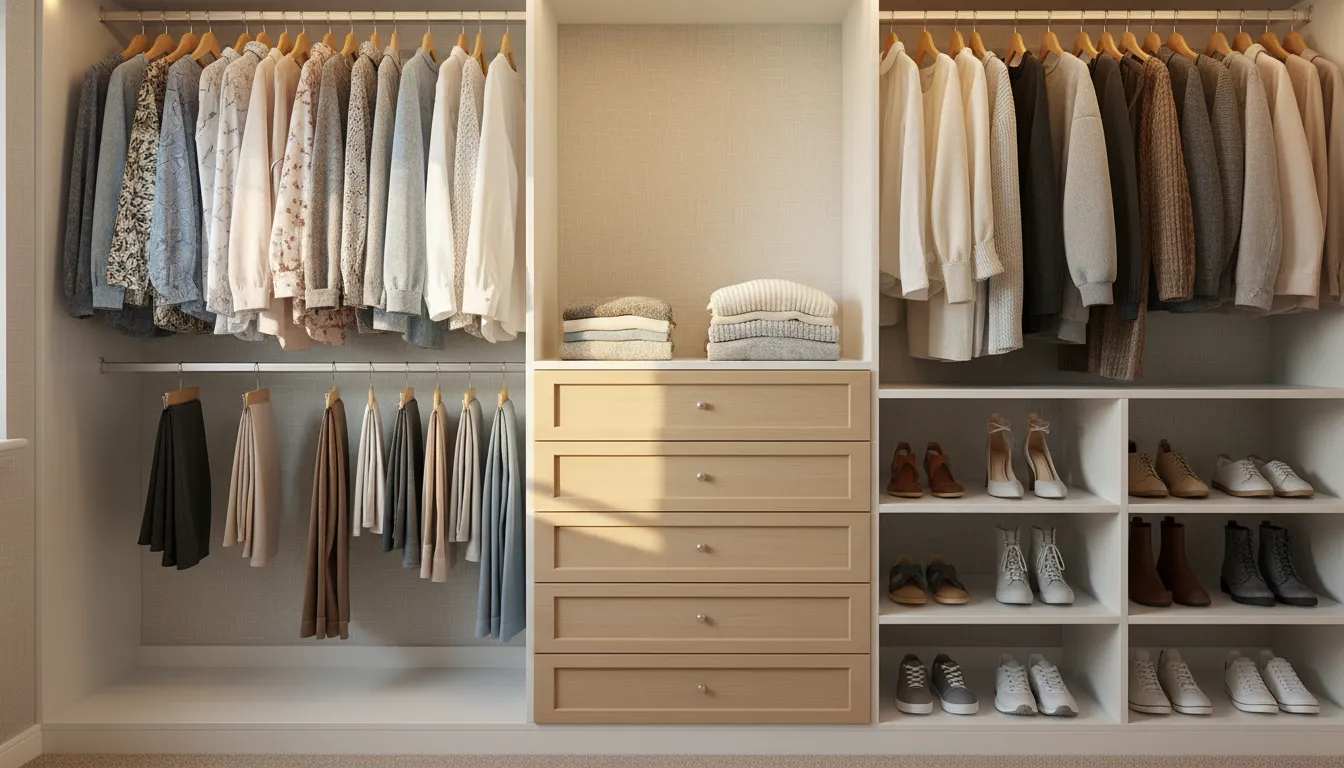
What bedroom closet layout fits your space?
The right closet system for your bedroom starts with how you reach clothing each day. Look at the opening, usable walls, door swing, and the items that must stay easy to see.
Reach-in closets for quick access
A reach-in layout works well when all storage needs to be visible from the bedroom. It can place daily shirts, pants, shoes, and folded items within one clear view. The key is to use the wall behind the opening without blocking access to the ends.
Think about which items you grab before work or school. Keep those near the center, then reserve side areas for less-used pieces. Creative Closets’ reach-in closet organizers show how hanging space, shelving, and drawers can share a compact opening.
Walk-in closets for shared routines
A walk-in layout gives you more than an entry point; it gives you walls to assign by task. One wall might serve hanging clothes, while another holds folded wear, shoes, or accessories. This can help two people find their items without using the same storage zone.
Access still matters in a larger closet. Leave a clear path to clothing and keep doors or drawers from competing with that path. A custom walk-in closet system can be planned around the walls you have and the way you dress.
If your walk-in is compact, review our small walk-in closet design ideas to add storage while protecting a comfortable path.
Wardrobe-style storage for open walls
Some bedrooms have no built-in closet, or the closet cannot hold everyday clothing. A wardrobe-style system can use an open wall for hanging, drawers, or closed storage. It also keeps the layout focused on one clear purpose, rather than filling every open wall.
Before choosing that wall, list what truly needs bedroom storage. For each item group, ask whether you use it now and have space to put it away. Mayo Clinic advises checking immediate use and available space before bringing items home. Read its uncluttering game plan.
Match the layout to your routine, not only the closet label. Choose reach-in storage for a clear front view, walk-in storage for assigned walls, or wardrobe-style storage when an open wall must do the work. Then plan hanging, folded items, and shoes around that choice.
Compare bedroom closet system options before deciding
Bedroom closet system options range from fixed retail sections to measured custom layouts. Compare usable fit, support during planning, installation responsibilities, and long-term adjustment options. The best selection is the one that makes daily clothing and accessory access straightforward within your specific room.
Three ways to build storage
A closet system for your bedroom can start with ready-made parts, a configurable plan, or a professionally designed layout. Each path can organize clothing and shoes. The better fit depends on the room, your daily habits, and how much design help you want.
Basic modular retail organizers use standard sizes that you select and install. Configurable systems offer more choices for rods, shelves, drawers, and finishes. Professionally designed storage starts with closet measurements. It then fits storage to the wall space and wardrobe.
A clear side-by-side view
Think first about what must work each day: hanging lengths, folded items, shoe storage, drawers, and corners. A bedroom closet is part of a home routine. One published study on housework and health found links between household chores and well-being.
| Option | Fit | Design support | Installation |
|---|---|---|---|
| Modular | Standard sections | Self-planned | Owner assembled |
| Configurable | More size choices | Some guidance | Varies |
| Custom | Measured layout | Personal planning | Installation team |
Questions that narrow the choice
Start with fit. A simple reach-in closet and wardrobe may work well with modular parts. An angled wall, shared closet, or walk-in layout may call for planning and a tailored custom closet system.
Next, decide how much you want to handle in design and installation. Some homeowners prefer choosing parts and doing the work. Others value a measured plan, chosen finishes, guided choices, and installation by a trained team.
Finally, compare what happens after installation. Check written coverage, adjustment options, and who answers questions later. A professionally designed system can include written support. Creative Closets provides a lifetime warranty for products and workmanship.
How do you plan a bedroom closet system?
A useful closet plan starts with daily life, not shelves on a screen. Before meeting a designer, note what you own and what slows you down. Then note what should stay easy to reach.
This preparation helps shape a closet system for your bedroom around real habits. It does not require you to measure, build, or install a system on your own.
A six-step preparation list
-
Review what the closet holds. Look at hanging clothes, folded pieces, shoes, bags, accessories, linens, and seasonal items. Sort items into keep, donate, recycle, or discard groups.
-
Clear out items you no longer use. Ask what you wear and what still needs space. A Mayo Clinic uncluttering plan suggests asking if you need an item, use it, and have room for it.
-
List current frustrations. Write down trouble spots, such as crowded rods, piled sweaters, hidden shoes, or no place for jewelry. These notes show which problems a new layout must solve.
-
Map access needs. Decide which outfits, shoes, and accessories you need most often. Note long garments, shared storage needs, or items that should be within easy reach.
-
Prioritize features and style. Rank hanging room, shelves, drawers, shoe storage, hampers, or accessory storage. Save a few finish and hardware ideas that suit the bedroom.
-
Meet with a designer. Bring your notes and style ideas to a Creative Closets in-home showroom consultation. The designer can turn those needs into a fitted layout and clear design options.
Turning needs into a design brief
Separate must-haves from nice-to-haves before the visit. Easy-to-reach hanging space may be essential. A display shelf may be optional. This makes design choices easier to discuss and compare.
Consider the type of closet as well as its contents. A reach-in closet may need quick access across a compact span. A walk-in may support zones for dressing, shoes, and shared storage.
Your notes create a practical design brief, not a shopping list of parts. For more feature ideas, use this practical design and function checklist before your design meeting.
Choose finishes and details for a lasting fit
Finishes and small details shape how a closet system for your bedroom looks and works each day. Start with the room, not the closet alone. Then choose features that support the way you dress, fold, store, and reach for daily items.
A finish that belongs in the room
A finish should sit comfortably beside the bedroom furniture, flooring, wall color, and closet doors. A quiet match can help the closet feel settled within the room. A contrast can work too, when it repeats another tone already used nearby.
Look at finish choices in the bedroom light, during both morning and evening use. Place a sample near nearby furniture if that option is available. The goal is a calm backdrop that keeps clothes and personal items easy to see.
Details you touch every day
Hardware affects daily comfort as much as appearance. Consider whether handles are easy to grip and whether drawers open without blocking your usual path. For shelves and hanging areas, keep the most-used items within easy view and reach.
Small features should solve a real routine, rather than simply fill space. Review options for closet accessories for daily storage by starting with items that otherwise collect on a dresser or floor. This helps each detail earn its place.
Useful details include drawers for small folded items, open shelves for pieces you want to spot. Dedicated places for shoes or bags, and hanging space sized for garment lengths.
Flexible storage for changing needs
A clear home for each item supports both order and safe movement. Washington State University storage guidance recommends designated storage areas and suitable containers to help avoid trip hazards. In a bedroom closet, that principle favors planned places over loose piles.
Think about changes that may come later, such as a different wardrobe mix or shared storage. Flexible shelves, drawers, and open sections can respond to daily habits. A functionality guide for your bedroom closet can help you compare details before deciding.
Choose the mix that makes each item easy to put away and easy to find. A finish sets the visual tone, while practical details support the routine behind it.
When should you work with a closet designer?
A closet designer helps when a bedroom closet has difficult dimensions, shared storage demands, crowded categories, or a need for a cohesive installed appearance. A measured design conversation connects the room, wardrobe and routine before features and finishes are selected.
When your storage needs are complex
A closet system for your bedroom may need to serve more than one person, clothing type, or daily routine. Shelves, drawers, shoes, long garments, and accessories must fit together. A designer can map those needs before the layout is set.
Guidance is useful when a reach-in closet, walk-in closet, or shared space has limits that a basic layout cannot address. A closet designer can help you weigh access, storage zones, and the overall look of the room.
Before a design visit, note what is stored now and what feels difficult each day. List hanging clothes, folded items, shoes, bags, and accessories. Also note whether two people share the closet or need separate zones.
When you want lasting organization
A permanent plan should start with habits, not just empty wall space. Think about what you reach for each morning, what gathers on the floor, and which items should stay out of sight. These details shape storage that is easier to maintain.
A designer-guided plan can give each category a home, instead of adding pieces without a full plan. Safe access matters too. Washington State University recommends designated storage areas and containers in its storage safety guidance. The goal is a clear path and storage that fits daily use.
When the closet should fit the room
A bedroom closet is part of the room, not only a place to hide clothing. You may want finishes, drawer fronts, shelving, and hanging sections to work as one plan. This is useful when you want a settled design, rather than a short-term fix.
Creative Closets offers an in-home showroom experience for reviewing design choices where the system will be used. You can consider how storage relates to the bedroom, nearby doors, and the way you move through the space.
Working with a designer makes sense when fit, function, and appearance all matter at once. Bring your inventory, your trouble spots, and your style goals. That gives the planning conversation a clear starting point.
Book your in-home closet design conversation
Frequently Asked Questions
What components should I look for in a closet system?
Look for the storage functions your wardrobe needs each day. Include double hanging for shirts and pants, longer hanging space for dresses or coats, shelves for folded items, and drawers for smaller belongings. Adjustable shelves and rods can support changing needs over time. Before selecting features, sort what will stay, following the practical keep, donate, recycle, or discard approach described by Mayo Clinic.
How can I maximize storage in a small bedroom closet?
Use the closet height before taking up more floor area. A small closet can benefit from double hanging sections, a narrow shelf tower, adjustable shoe storage, and hooks for frequently used accessories. Keep everyday items within easy reach, while seasonal pieces go higher. Leave the opening and floor clear enough for safe access, rather than filling every available inch.
Can I install a bedroom closet system myself?
Some ready-made closet systems are suitable for homeowners who can measure accurately, locate wall studs, level components, and follow mounting instructions. A customized built-in layout may be better handled by an installer, especially when walls are uneven or electrical outlets affect placement. Whichever approach you choose, securely anchor storage components and maintain clear walking space to reduce tipping and tripping risks.
How do I plan and personalize my bedroom storage?
Start by listing what you hang, fold, store in drawers, and use every morning. Measure wall width, depth, ceiling height, door swing, trim, and outlets before setting the layout. Then match each item category to a clear storage zone. In Washington homes, it is also sensible to plan convenient space for seasonal outerwear, extra bedding, and weather-ready accessories.
Ready to Plan a Bedroom Closet That Works?
When clothes, shoes, and daily essentials lack a clear place, your bedroom closet can keep costing you time and calm each morning. Starting your plan now helps you move from a frustrating layout toward storage choices built around how you actually get dressed. A careful design conversation also gives you a clear path for deciding what belongs within reach, what needs shelving, and what needs hanging space.