

Rain-soaked jackets and crowded shoes expose a bedroom closet that looks finished but fails daily. Washington storage has to work for weekday dressing, wet seasons, and changing wardrobes.
Ready for a bedroom storage plan built around your routine? Schedule your in-home closet design consultation.
A closet system for your bedroom should fit the clothes you reach for each morning before it adds shelves, drawers, or hanging space. For Washington homeowners, that means planning for coats, damp-weather layers, shoes, linens, and seasonal overflow without pushing everyday items above easy reach. Sound layout starts with comfort: Oregon State University’s ergonomic design guide explains that products fitted to users reduce discomfort and stress. Check hanging lengths, folded stacks, shoe counts, hamper placement, door clearance, lighting, and reachable storage before choosing the system layout or finish. A practical design then assigns prime reach space to daily clothing, while adjustable sections and safe installation support years of changing routines.
The checklist ahead turns that daily-use test into clear decisions about zones, measurements, lighting, hardware, and installation. First comes Closet system for your bedroom: begin with daily use, focused on what you store, reach, and put away most often. Here’s how.
Closet system for your bedroom: begin with daily use
Your getting-ready routine
A closet system for your bedroom should begin with what you reach for each morning. Before choosing shelves or drawers, take a quick wardrobe count. Note workwear, casual outfits, coats, folded knits, shoes, bags, belts, and jewelry. Then mark the items you wear each week and the items used less often.
Walk through a normal morning, from selecting clothes to finding shoes and putting away sleepwear. This simple check keeps storage tied to real habits, not a display plan. For King and Pierce County homeowners, it also helps account for rain layers, boots, and seasonal clothing without crowding daily outfits.
Storage zones by item type
Sort each group by how you use it. Clothes that wrinkle need hanging room; sweaters and workout wear often suit shelves or drawers. Shoes need a clear, easy-to-clean home. Small accessories should stay visible or divided, so one missing belt does not slow the morning routine.
- Hanging: count long dresses, shirts, pants, jackets, and paired outfits separately.
- Folding: group sweaters, denim, sleepwear, activewear, and seasonal basics.
- Shoes: separate daily pairs, boots, dress shoes, and less-used footwear.
- Accessories: allow small zones for jewelry, watches, belts, ties, and handbags.
If your inventory needs a fitted mix of rods, drawers, and shelves, review ideas for a bedroom closet design ideas. Use the list as a planning check. Each common item should have a home that is easy to see and return to place.
Reach, comfort, and shared use
Next, plan access for the people who use the room. A shared closet may need separate hanging runs, divided drawers, or two shoe zones. Keep each person’s daily clothes within a comfortable reach. Reserve upper shelving for items used less often, such as luggage or off-season bedding.
Comfort matters because storage is used every day. Oregon State University explains that when products fit the user, they can support comfort and reduce stress. Apply that idea by reducing repeated bending, stretching, and twisting in your daily zones through ergonomic design guidance.
Before settling on a layout, mimic getting dressed in the planned zones. Check whether shirts, folded layers, shoes, and accessories are easy to reach in order. If two users cross paths or a key item is awkward to reach, adjust the storage plan before selecting features.
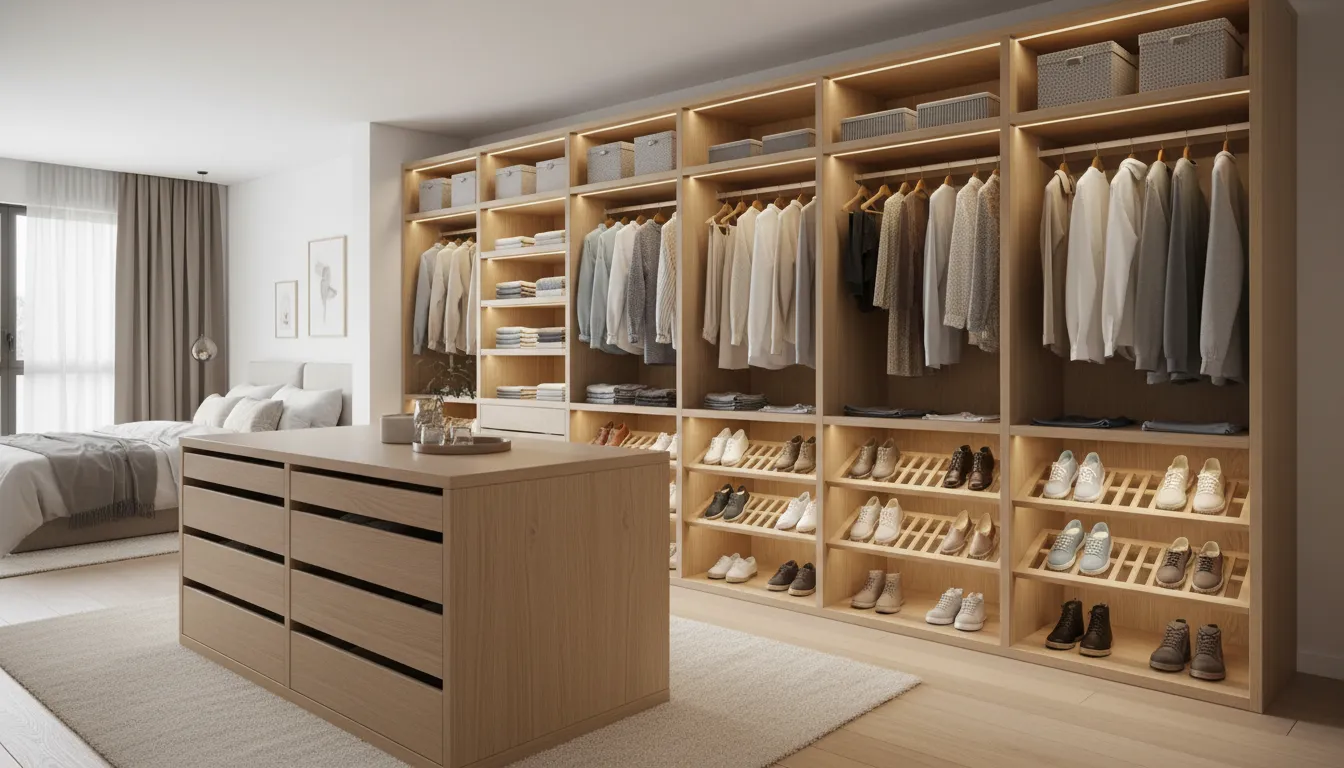
Which closet system for your bedroom layout matches the space?
A closet layout should match the room before it matches a wish list. Start with the doorway, clear walking path, wall width, corners, and the people who will use the storage each day.
Reach-in closets and door clearance
A reach-in closet is often the clearest fit when storage sits behind one bedroom wall. First, note whether sliding, bifold, or swing doors block drawers, baskets, or the side corners when open.
Plan the most-used hanging space and shelves within easy reach. Storage should fit normal use, since ergonomic design aims to reduce fatigue and discomfort, as the Oregon State University design guide explains.
In a narrow reach-in, a centered drawer stack can split short hanging zones without hiding clothes in corners. A built-in closet planning guide can also use shelves above hanging areas for less-used items.
Walk-in closets and shared zones
A walk-in layout works best when there is enough clear floor area to enter, turn, and open storage. A large footprint alone is not enough; a tight aisle or deep corner can make part of the closet hard to use.
For a shared bedroom, assign each person a hanging and drawer zone before adding display shelves. Use the back wall for shared shoes, bags, or folded linens, if access remains clear from both sides.
Watch the entry door and bedroom traffic flow, too. A closet door can meet a dresser or block the path to the bed. This can make a roomy design feel cramped each morning.
Open-wall storage and compact rooms
Open-wall or wardrobe storage can suit a room without a built-in closet, or a reach-in that needs overflow space. It should not claim the walking lane between the bed, door, and window.
Choose this layout when an open wall is more useful than the floor space it takes. In small bedrooms, a closet system that maximizes storage should keep daily clothing easy to reach without crowding movement.
- Choose a reach-in layout when shallow storage and clear door access matter most.
- Choose a walk-in layout when clear aisles and separate shared zones fit comfortably.
- Choose open-wall storage when a free wall solves a real storage gap without blocking traffic.
Compare bedroom storage components by function
Start with what you reach for daily
A useful closet system for your bedroom starts with daily routines, not a list of extras. Group clothes and personal items by how you use them: hung, folded, paired, hidden, or collected for laundry. This keeps each component tied to a clear job.
An Oregon State University ergonomics guide notes that products fitted to the user can reduce discomfort and stress. In a bedroom closet, keep often-used items in comfortable reach. Reserve less handy spaces for items you use less often.
Component choices at a glance
No one storage type handles every item well. The right mix depends on what you own now, what needs quick access, and what you prefer to see or conceal.
| Component. | Best fit for. | Daily function. | Plan for change. |
|---|---|---|---|
| Hanging rods. | Shirts, pants, dresses, jackets. | Keeps garments visible and ready. | Leave room for longer items or more hanging. |
| Shelves. | Folded knits, bags, bins. | Creates clear stacks and zones. | Adjust spacing as item sizes change. |
| Drawers. | Underwear, socks, sleepwear. | Conceals small items and limits clutter. | Use dividers that can shift later. |
| Shoe storage. | Everyday footwear and dress shoes. | Keeps pairs together and easy to scan. | Allow varied space for boots or heels. |
| Hamper and accessory storage. | Laundry, belts, jewelry, scarves. | Gives loose items a set home. | Add locations as routines change. |
If most clothes hang, rods should shape the first draft of the layout. If folded items fill your room, shelves and drawers may take more space. Shoes, laundry, and accessories should not be afterthoughts. They often cause surface clutter when they lack assigned storage.
Room for later changes
Bedroom storage needs can shift with work wardrobes, shared closets, or a new preference for folded clothing. Build in choices that are easy to revise, such as movable shelves and flexible hanging areas. Other zones can switch from bags to shoes.
As you map the components, review how a custom storage configuration organizes separate functions in one layout. A practical plan assigns a home to today’s items while preserving space for the way you may store them later.
How should you prepare for a bedroom closet design?
A good consultation starts with your daily routine, not a list of products. Before choosing a closet system for your bedroom, gather the details that show what you store and how you use it. This helps a designer plan a layout that suits the room and the people who use it.
Your closet and daily routine
Think about reach and comfort as you take notes. An Oregon State University ergonomics and design guide explains that products work better when they fit the user. That principle applies to rods, shelves, drawers, and often-used items.
-
Audit what you store. Sort items into long hanging clothes, short hanging clothes, folded pieces, shoes, bags, accessories, and seasonal items. Note which groups need the most room. A simple count gives your designer a clear starting point for the plan.
-
List the routines you want to support. Note where mornings slow down, such as finding workwear, storing laundry, or keeping shoes in easy reach. Include each person who uses the bedroom closet. Your design can then support real habits instead of a general storage plan.
-
Record room and clearance details. Show the designer closet doors, windows, outlets, vents, trim, and nearby bedroom furniture. Note how doors swing and where walking room matters. These details help shape a plan that feels natural in the full room.
-
Rank storage features and finishes. Decide what matters most, such as more double-hang space, drawers, shoe shelves, open shelving, or a hamper area. Then collect finish ideas that suit the bedroom. For more context, review a bedroom built-in storage options before your meeting.
-
Prepare questions and examples. Bring photos of the closet and any looks you prefer. Ask how daily-use items will be placed and how shared storage will be divided. Then ask which choices best fit your priorities. Clear questions make the design talk focused and useful.
-
Meet with your designer in the space. Creative Closets brings its in-home showroom to your home. The visit can include consultation, 3D design planning, and pricing in one meeting. You can compare storage zones and finishes where the closet will be used.
What to have ready for the visit
Keep your clothing notes, room observations, inspiration photos, and ranked wish list together. You do not need a finished layout before the meeting. Your designer can use those details to plan an organized bedroom closet. It should match how you get ready, store items, and share space.
Select finishes and details that fit the bedroom
A finish that belongs in the room
A closet is part of the bedroom view, even when it sits behind doors. Start with nearby floors, trim, dressers, and door hardware. Warm wood tones can echo a bed frame. A painted finish can help a small room look quiet and light.
Keep the finish plan simple: one main cabinet finish and one hardware tone often feel settled. For a built-in look, compare finish samples in the bedroom during daylight and after dark. A planning a fitted bedroom closet should look connected to the room, not added as an afterthought.
Details that support the daily routine
Handles should be easy to grip, with a size and shape that feels natural in the hand. Drawer pulls, hooks, valet rods, and hamper fronts can share one finish for a tidy result. Place often-used items where getting dressed feels smooth. Avoid making each choice a reach.
This is more than a style choice. Oregon State University explains that products fitted to the user can support comfort and reduce stress. Its ergonomics and design guide supports planning shelves, drawers, and controls around daily movement.
Give accessories their own homes before choosing the final layout. Shallow drawers can hold jewelry, belts, or folded small items. Open shelves keep shoes or bags in sight. A lined tray can keep watches and keys from collecting on a dresser.
Lighting and room to adjust
Lighting should help you see color and find small items, without adding glare near the bed. Check whether the room light reaches lower drawers and back corners. If it does not, plan closet lighting early. Wires, switches, and shelves can then work together.
Think ahead as you select the final details. A mix of hanging space, shelves, and drawers can serve work clothes now and folded items later. Adjustable shelves also leave room for new shoes, bags, or storage bins. The goal is a calm bedroom closet that stays useful as daily needs change.
When does a designer-guided closet plan make sense?
Rooms that need a measured plan
A designer-guided plan makes sense when a bedroom asks more from storage than a single hanging rod can handle. Shared closets, sloped ceilings, tight corners, and several door swings can affect what fits and what stays easy to reach.
That is also useful when two people share the room but store different kinds of clothing. A plan can set aside separate hanging, drawer, shoe, and shelf areas before the system is built.
A simple reach-in with standard needs may be easy to plan from careful measurements and a clothing list. Guidance becomes useful when the space must balance two routines, unusual walls, or storage needs that can change over time.
Reach, style, and future storage
A closet should support daily movement, not force awkward reaching or bending. An Oregon State University ergonomics design guide explains that products fitting the user can mean more comfort and less stress.
Start with what is used each morning and what is stored less often. A designer can place daily items where they are easy to reach. Higher or less central areas can hold occasional storage.
Designer guidance may help when reach height, mobility, or long-term changes matter. It can also keep finishes, drawer fronts, and hardware consistent with the bedroom, instead of choosing each storage piece alone.
Decisions made in the bedroom
Sample doors and finishes may look different beside bedroom flooring, wall color, and daylight. Planning in the room also helps account for baseboards, outlets, trim, nearby furniture, and clear walking space.
Creative Closets offers a complimentary in-home consultation with an in-home showroom. During that visit, homeowners can discuss a closet system for your bedroom and see how a proposed layout suits the room.
This approach can help when fit, use, and style must work together for years. Homeowners can review the in-home design process and browse custom walk-in closet designs before choosing their next step.
Frequently Asked Questions
What should I include in a closet system for your bedroom?
Start with an inventory of hanging clothes, folded items, shoes, accessories, and seasonal pieces. Then assign each category a home, such as double hanging rods, shelves, drawers, or shoe storage. Include adjustable components if storage needs may change. In Washington, make room for coats, boots, and layered clothing that rotate with wet and cool seasons.
How do I choose a bedroom closet layout that is comfortable to use?
Place everyday clothing between comfortable waist and shoulder height, with occasional items on upper shelves. Keep heavy or frequently handled pieces easy to reach without deep bending or twisting. This follows Oregon State University ergonomic design guidance, which focuses on fitting products to the user to reduce discomfort and unnecessary effort.
What are the best types of closet systems for a bedroom with limited space?
A compact bedroom closet often benefits from vertical storage, double hanging sections, drawers for small items, and adjustable shelving. A wall-mounted layout can keep the floor clearer and make the available width work harder. Before selecting a system, measure wall width, depth, door swing, outlet locations, and the longest garments that need uninterrupted hanging space.
How can a bedroom closet design adapt as storage needs change?
Choose a layout with adjustable shelves, flexible hanging sections, and space for drawers or accessory storage later. Separate daily clothing from seasonal pieces so the closet can shift as wardrobes rotate through Washington’s weather changes. If household needs or mobility change, accessible shelf and rod placement can preserve daily usability, a principle supported by Northwestern University accessibility research.
Ready to Plan a Bedroom Closet That Works for You?
An inefficient bedroom closet can waste useful space and make busy mornings harder than they need to be. Putting off the decision means more time searching, stacking, and working around storage that does not match your daily routine or your longer-term storage needs. Starting now lets you define priorities early and plan a practical layout for the clothes, shoes, and accessories you use most with confidence.
Ready to turn your checklist into a workable design plan? Schedule your complimentary in-home design consultation to review the bedroom space and the storage choices that matter most to you. Take the next step toward an organized layout that makes daily use simpler and keeps your design decisions focused.