

Your home office storage system should do more than hold your stuff. It should support the way you actually work, fit the room you have, and look good on every video call. For homeowners across King and Pierce Counties who shifted to remote work and never went back, getting this right is no longer optional.
Schedule your free in-home design consultation to see what a custom home office system looks like in your space. For a built-in option tailored to your space, explore Creative Closets’ custom garage cabinets.
The problem is that most home offices evolve by accident. A desk here, a bookshelf there, a filing cabinet crammed into a corner. The result is wasted space, visual clutter, and a setup that fights your workflow instead of supporting it. A planned home office storage system replaces all of that with a coordinated layout where every component earns its place.
This guide covers specific ideas and configurations you can apply to your space, whether you have an entire spare bedroom or a corner nook carved from a hallway.
What Makes a Home Office Storage System Different from Regular Furniture?
A home office storage system is a unified set of shelving, cabinetry, desk space, and organizational accessories designed to work together in a residential workspace. Unlike standalone furniture pieces purchased separately, each component in a custom system is sized, positioned, and finished to complement the others, maximizing function while minimizing wasted floor space throughout the entire room.
This is different from buying a desk, a bookcase, and a filing cabinet separately. Standalone furniture rarely fits your wall dimensions exactly. You end up with gaps between pieces, mismatched heights, and dead space that collects dust. A planned system eliminates those issues by treating the entire room as one integrated design.
The core components of a complete home office storage system include:
- Built-in or adjustable shelving for books, binders, and reference materials
- Closed cabinetry with doors to hide printers, paper supplies, and cords
- A built-in desk with integrated filing drawers, keyboard trays, and cord management
- Lockable file storage for tax records, contracts, and sensitive documents
- Display areas for awards, photos, or items you want visible on camera
When these pieces are designed as a single system, you gain storage capacity without sacrificing floor area. That matters in the Seattle metro, where the median home in communities like Sammamish and Bellevue may have generous square footage but limited rooms dedicated solely to office use.
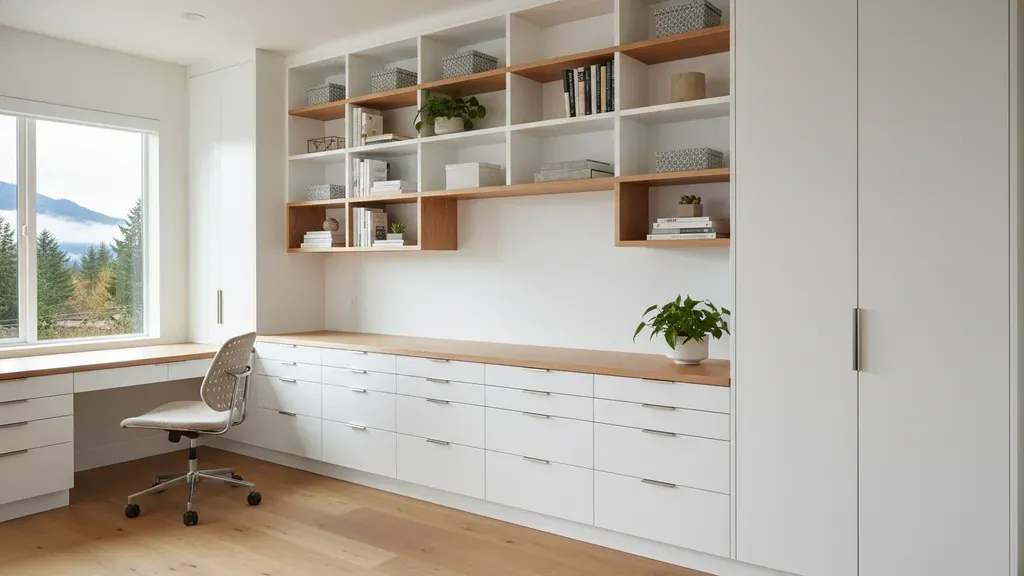
Built-In Shelving Ideas for Home Offices
Shelving is the structural backbone of any home office storage system, and Creative Closets designs shelving configurations that transform ordinary walls into organized, high-capacity storage zones. The right shelving setup keeps your most-used materials within arm’s reach while using vertical space that freestanding bookcases completely ignore, giving you significantly more usable storage per square foot.
Floor-to-Ceiling Adjustable Shelving
Floor-to-ceiling built-ins transform a single wall into a storage powerhouse. With adjustable shelf pins, you can accommodate everything from tall binders to small decorative objects without wasted vertical gaps. A standard 8-foot ceiling allows five to six usable shelf rows above desk height, giving you significantly more capacity than a standalone bookcase.
This configuration works especially well in rooms with standard 10-foot or wider walls, where you can flank a central desk with symmetrical shelf towers. The visual balance creates a clean, professional backdrop for video calls while keeping reference materials one turn away.
Floating Shelves Above the Desk
When floor space is limited, floating shelves above your desk provide accessible storage without a bulky bookcase footprint. Two to three rows of 36-inch floating shelves hold current project folders, reference books, and a few personal items. Keep the lowest shelf at least 18 inches above your desk surface to avoid bumping your head or blocking your monitor.
Floating shelves pair well with a wall-mounted approach that frees up floor area for other furniture, like a small filing cabinet or guest chair.
Open Shelving with Cabinet Base
A hybrid setup puts open shelving on top and closed cabinets on the bottom. The open shelves display books, awards, and items you access daily. The lower cabinets, typically 30 to 36 inches high, conceal printers, paper supplies, and anything that creates visual noise. Doors keep the room looking orderly even when the contents behind them are less than perfect.
What Are the Best Custom Desk Configurations for a Home Office?
The desk is the centerpiece of your home office storage system, and choosing the right built-in desk configuration determines how efficiently you work every day. Creative Closets builds custom desk setups integrated directly into surrounding cabinetry, offering advantages in space efficiency, cord management, and visual cohesion that standalone desks cannot match.
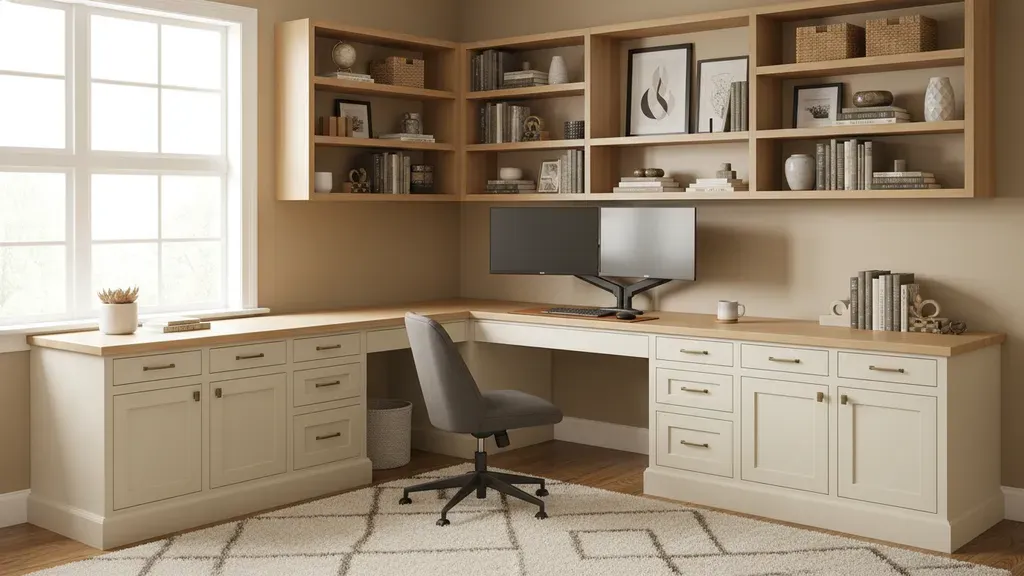
L-Shaped Built-In Desks
An L-shaped desk uses two adjacent walls, placing your primary work surface on one side and reference materials or secondary equipment on the other. This layout creates a natural workflow where you can shift between tasks by rotating your chair rather than standing up. For rooms at least 10 by 10 feet, an L-shaped configuration is the most popular choice among homeowners with dedicated offices.
Built-in versions extend the desk surface directly into the surrounding cabinets and shelving. Filing drawers sit beneath the desk on one side. Printer storage tucks under the return. The result is one cohesive unit with no gaps, no wobble, and no wasted space between mismatched furniture pieces.
Single-Wall Desk with Integrated Storage
When you only have one wall to work with, a single-wall configuration places the desk at the center with cabinets and shelving extending above and to both sides. This approach packs the storage capacity of two or three freestanding furniture pieces into a compact footprint.
The desk surface should be at least 60 inches wide for comfortable dual-monitor use. Above the desk, upper cabinets or open shelves reach toward the ceiling. Below, a combination of filing drawers, a pull-out keyboard tray, and a cord management channel keep the surface clear.
Standing Desk Integration
If you alternate between sitting and standing, a built-in system can accommodate an adjustable-height desk section alongside fixed-height cabinetry. The surrounding shelving and cabinets remain stationary while the central desk surface raises and lowers. This hybrid approach works best with a motorized desk mechanism installed within a custom frame that matches the surrounding millwork.
Get a custom 3D design for your home office — book your free consultation today.
Filing and Document Storage Solutions
Even in an increasingly digital world, most home offices still need dedicated space for physical documents, and a well-designed filing system keeps important papers organized, secure, and accessible without cluttering your primary workspace. Tax records, contracts, property documents, and active project files all require organized, labeled storage that integrates seamlessly with the rest of your office system.
Built-In Filing Drawers
Integrating filing drawers directly into your desk pedestal puts your most-accessed documents within arm’s reach. Standard filing drawers accommodate letter-size hanging folders, while legal-size drawers handle larger documents. Plan for at least one filing drawer per active project category, plus a deep drawer for hanging file folders.
Lockable drawer fronts protect sensitive materials. This is especially important for homeowners who work with financial data, client records, or legal documents and share their home with children or guests.
Lateral File Cabinets
For heavier filing needs, a lateral file cabinet built into the lower portion of your wall unit provides wide, shallow drawers that let you see folder labels at a glance. A 36-inch lateral file cabinet holds approximately 50% more folders than a standard vertical file drawer of the same width.
Archive Storage with Labeled Sections
Items you access monthly or less, such as past tax returns or completed project files, belong in upper cabinets or dedicated archive zones. Use labeled bins or binders inside closed cabinets so you can locate specific documents without digging through unmarked boxes. This keeps your primary work zone clear for active tasks.
How Should You Lay Out a Home Office Storage System by Room Size?
The best layout for your home office storage system depends on the specific room you are working with, and Creative Closets designs custom configurations matched to every room size found in Seattle-area homes. Whether you have a spacious spare bedroom or a compact hallway nook, choosing the right layout maximizes both storage capacity and comfortable working space.
Small Room (Under 80 Square Feet)
In a room this size, typically a converted guest bedroom or a large closet, every inch counts. A single-wall system with an integrated desk, overhead cabinets, and a narrow bookshelf tower maximizes storage without making the room feel cramped. Keep the desk depth to 24 inches to preserve walkway space, and use the wall above the desk for two to three rows of shelving.
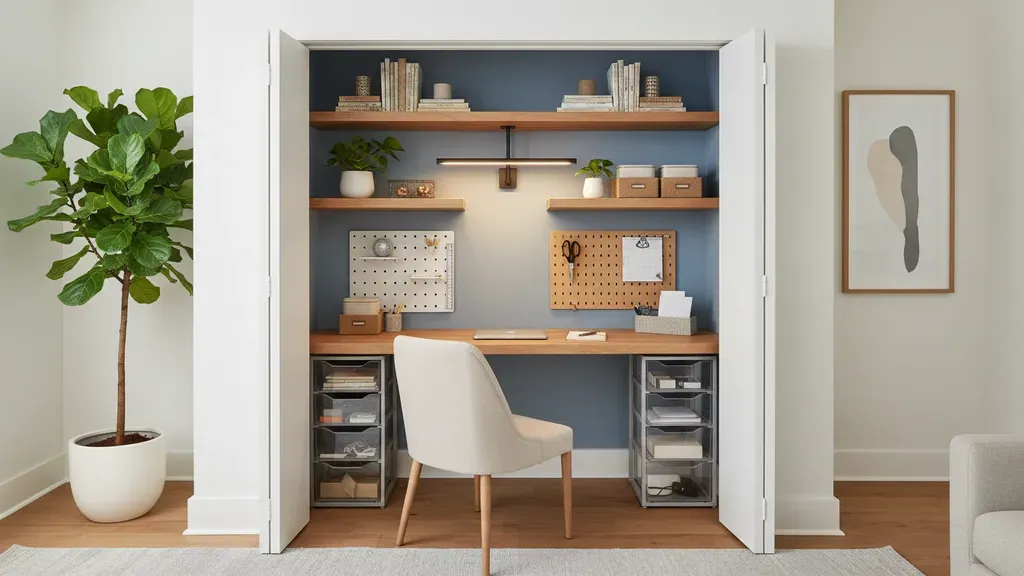
If you are converting a closet into a home office, removing the closet doors and installing a built-in desk and shelving system inside the closet frame creates a surprisingly functional workspace that closes off when not in use.
Medium Room (80 to 150 Square Feet)
This is the sweet spot for most home offices. An L-shaped layout with built-in shelving along one wall and a desk wrapping around the corner gives you ample storage and work surface. Include a base cabinet with a printer shelf, two filing drawers, and upper shelving for reference materials. A medium room also has space for a small seating area or standing desk zone.
Large Room or Dual-Purpose Space (Over 150 Square Feet)
Larger rooms allow a U-shaped layout that wraps storage around three walls. The desk anchors one side, with bookshelves, display cabinets, and equipment storage distributed across the remaining walls. This is ideal for homeowners who maintain extensive reference libraries, run a business from home, or share the room with a partner who also works remotely.
For rooms that double as a library or guest space, consider a built-in library wall opposite the desk area. The library section serves as storage and an aesthetic focal point, while the office side stays functional and organized.
Storage Solutions for Specific Work Styles
Your work habits should shape your home office storage system, not the other way around, and Creative Closets designs each system around how the homeowner actually works day to day. Whether you handle large volumes of paper documents, manage multiple screens and devices, or split your time between home and a corporate office, the right configuration supports your specific workflow.
For the Paper-Heavy Professional
Accountants, attorneys, real estate agents, and financial planners often handle large volumes of physical documents. Prioritize deep filing drawers, a lateral file base cabinet, and a dedicated shredding station. Include at least one lockable cabinet for client-sensitive materials. An inbox tray on the desk surface and a wall-mounted sorter prevent paper from piling up between filing sessions.
For the Tech-Focused Worker
Software engineers, designers, and content creators need storage that accommodates multiple monitors, external drives, drawing tablets, and tangled cables. Focus on desk depth (at least 30 inches for dual-monitor setups), integrated cord management channels, and cabinets with built-in power outlets. A pull-out shelf for a secondary keyboard or drawing tablet keeps the primary surface clear.
For the Hybrid Worker
If you split time between your home office and a corporate workspace, your storage needs are lighter but still specific. A compact system with a clean desk, one filing drawer, and overhead shelving handles the essentials. Invest in a high-quality video call backdrop: built-in shelving with a few curated personal items reads better on camera than a blank wall or a cluttered bookcase.
Materials and Finishes That Hold Up
A home office storage system is a long-term investment in your daily productivity and your home’s value, so the materials you choose affect both durability and appearance over years of daily use. Creative Closets uses high-quality materials that resist wear, maintain their finish, and complement the interior design preferences common in Pacific Northwest homes.
Thermally Fused Laminate (TFL)
TFL is the most common material for custom office cabinetry. It resists scratches, moisture, and fading better than painted MDF, and it is available in hundreds of colors and wood-grain patterns. For a home office, neutral tones like white, warm gray, or natural wood grain create a professional look without overwhelming the room.
Solid Wood Accents
Solid wood adds warmth and character when used selectively, such as a wood-edge desk surface or open shelving with solid wood facing. It pairs well with TFL cabinets for a look that balances cost and aesthetics. In Pacific Northwest homes, natural wood tones complement the regional design preference for warm, nature-inspired interiors.
Hardware and Accessories
Soft-close drawer slides, adjustable shelf pins, and concealed hinges are worth the incremental cost. They reduce noise, prevent slamming, and allow you to fine-tune your custom storage configuration as your needs change. Pull-out keyboard trays, built-in USB charging ports, and wire management grommets round out a system that works as well on day 1,000 as it does on day one.
How Does Custom Storage Compare to Off-the-Shelf Solutions?
Choosing between a custom built-in home office storage system and off-the-shelf furniture is one of the most important decisions homeowners make when setting up a permanent workspace. Creative Closets builds custom systems designed to fit your exact room dimensions and workflow needs, while off-the-shelf furniture offers lower upfront cost but comes with significant tradeoffs in fit, durability, and long-term value.
| Feature | Custom Built-In System | Off-the-Shelf Furniture |
|---|---|---|
| Fits exact room dimensions | Yes, designed to your walls | Standard sizes, often leaves gaps |
| Integrated cord management | Built into the design | Usually requires aftermarket solutions |
| Material consistency | Uniform finish across all pieces | Varies between manufacturers |
| Adjustability | Shelves, drawers, and desk height customizable | Limited to factory configurations |
| Home value impact | Adds permanent built-in appeal | Portable, no lasting impact |
| Typical cost range | $2,000 to $8,000+ | $500 to $2,000 |
| Warranty | Often lifetime (materials and workmanship) | 1 to 5 years typical |
Bottom line: Off-the-shelf furniture works for temporary setups or renters. For homeowners planning to work from home long-term, a custom built-in system pays for itself in durability, storage capacity, and home resale value.
Getting Started With Your Home Office Storage System
Designing a home office storage system starts with understanding how you work and what your room can accommodate, and Creative Closets simplifies the entire process from initial measurements to completed installation. Follow these five steps to move from an unorganized workspace to a fully custom system designed around your specific needs and room dimensions.
- Inventory your work materials: List everything your office needs to store, from daily-use items to annual archives. Knowing the volume prevents under-building or over-building.
- Measure your space: Record wall lengths, ceiling height, window placement, and outlet locations. These measurements determine which layout configurations are possible.
- Choose a layout: Match your room size and work style to one of the configurations above. Most homeowners land on an L-shaped or single-wall system.
- Select materials and finishes: Pick a palette that complements your home’s interior. Neutral tones age well and maintain a professional appearance.
- Schedule a consultation: A professional designer can create a 3D rendering of your system before a single piece is cut. This lets you see the finished result and make adjustments before committing.
Creative Closets brings the entire design experience to your home. During a free in-home consultation, a designer measures your space, discusses your workflow, and creates a custom 3D design at your kitchen table. There is no obligation and no pressure. Most projects move from consultation to completed installation in about three weeks, with the actual installation finished in a single day.
Your home office deserves a storage system that works as hard as you do. Schedule your free design consultation and see what a custom solution looks like for your space.
Frequently Asked Questions
How much does a custom home office storage system cost?
A custom home office storage system typically ranges from $2,000 to $8,000 or more, depending on room size, materials, and the number of components. Basic setups with a built-in desk and shelving start at the lower end, while full wall systems with cabinetry, filing drawers, and premium finishes sit at the higher end. Creative Closets provides exact pricing during a free in-home consultation.
Can I convert a closet into a home office storage system?
Yes. A standard reach-in closet with at least four feet of wall space and two feet of depth can be converted into a compact office with a built-in desk, shelving, and filing storage. Removing the closet doors opens the space visually, and interior lighting makes the converted area fully functional for daily work.
How long does it take to install a custom home office system?
Most custom home office storage systems are installed in a single day. The total timeline from initial consultation to completed installation is typically about three weeks, which includes design finalization, material ordering, and manufacturing. Creative Closets handles the entire process so there is no coordination with multiple contractors.
What is the best layout for a small home office?
A single-wall layout with an integrated desk, overhead cabinets, and a narrow shelf tower is the most efficient configuration for small rooms under 80 square feet. This design maximizes vertical storage while preserving floor space for a chair and walkway. For very tight spaces, a closet conversion is another effective option.
Do built-in home office systems add value to a home?
Built-in office systems add functional and aesthetic value to a home. Buyers increasingly look for move-in-ready home offices, especially in markets like the Seattle metro area where remote work is common among tech and professional workers. A well-designed built-in system signals quality and thoughtful use of space, which can influence buyer interest and perceived home value.