

Quick answer: The most useful pantry lighting ideas combine a soft general light with focused illumination at the shelf level. Plan the light source, color temperature, switch location, door swing, and cabinet depth together so every shelf is visible without glare or blocked access.
Plan your pantry lighting and storage with a free design consultation
What Makes Pantry Lighting Different?
A pantry is not simply a small kitchen. It is a storage room filled with shelves, tall containers, deep corners, and cabinet doors that can block light. A ceiling fixture may brighten the center of the room while leaving the lower shelves and areas behind shelf fronts in shadow.
Good lighting should help you identify ingredients at a glance, read container labels, spot spills, and move safely through the space. It should also work with the storage system instead of being added after the cabinets are already fixed in place.
That is why the best plan starts with use. Consider whether the pantry is a reach-in cabinet, a narrow walk-in room, or a larger space with a work surface. Each layout changes where light can travel and where fixtures can be concealed.
Which Pantry Lighting Layout Works Best?
Most pantries benefit from a layered layout. One light source handles general visibility, while additional light is placed close to the items you need to see. The goal is not to make every surface equally bright. The goal is to remove the dark pockets created by shelves and stored goods.
1. Start with ambient lighting
Ambient lighting provides the overall glow when you open the pantry door. A flush-mount or low-profile ceiling fixture can work well in a walk-in pantry with enough ceiling height. In a compact pantry, choose a fixture that does not interfere with the door, upper shelves, or a person’s line of sight.
Ambient light should be comfortable rather than harsh. A diffuser helps soften bright points and keeps the room from feeling like a utility closet. It is also helpful to center the fixture on the usable walkway, not automatically on the room’s geometric center if shelving changes the available floor area.
2. Add shelf-level task lighting
Under-shelf lighting is often the most effective improvement because it puts light where the stored items are. A slim LED strip or bar mounted near the front edge of a shelf can illuminate the shelf below and make items at the back easier to distinguish.
Placement matters. A light mounted too far toward the wall may brighten the back panel but leave the front of the shelf dim. A light mounted too close to the edge may create glare when you look upward. A diffuser and a carefully chosen position create a smoother wash of light.
3. Use vertical lighting for tall or narrow spaces
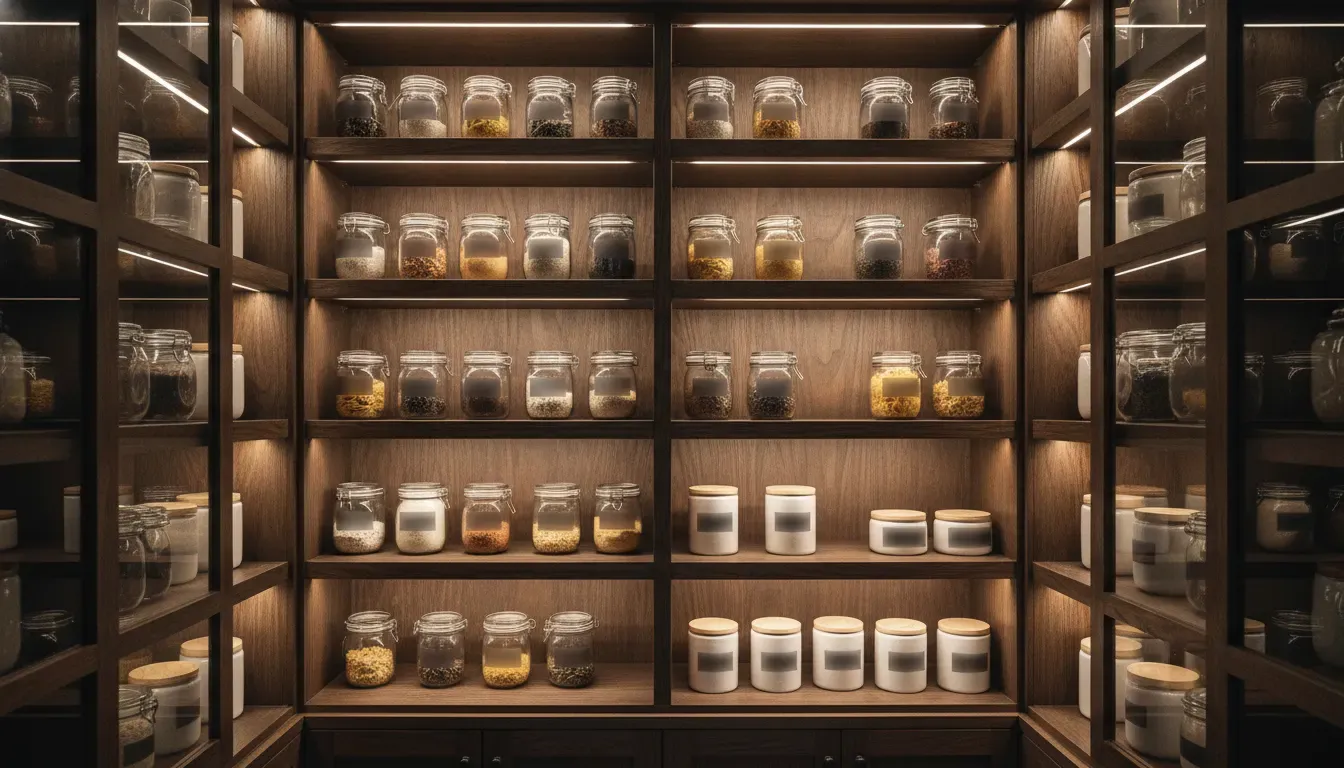
Vertical lighting can brighten the fronts of stored items in a tall pantry where horizontal shelves create repeated shadows. A discreet fixture along a side panel or near the door jamb can help illuminate the cabinet faces without taking valuable shelf space.
Vertical light is especially useful when the pantry has deep shelves, dark finishes, or shelving on both sides of a narrow walkway. It should be positioned so the open door does not block it and so the beam does not shine directly into your eyes as you enter.
4. Reserve accent lighting for selected features
Accent lighting is optional, but it can make a pantry feel like an intentional part of the kitchen. It may highlight a countertop, glass-front cabinet, wine storage area, or architectural detail. Keep it secondary to shelf visibility. Decorative light that looks attractive but leaves the working shelves dim does not solve the main problem.
How Should You Choose a Color Temperature?
Color temperature affects how the pantry feels and how clearly food, packaging, and finishes appear. Warm light creates a comfortable, residential atmosphere. A neutral white can make shelf contents appear crisp and easier to distinguish, particularly when the pantry has limited natural light.
Many homeowners start by comparing samples in the kitchen instead of choosing from a specification sheet alone. Place a sample light near the cabinet finish, countertop, and flooring. Look at it in the morning and evening, because surrounding light can change the result.
Consistency is more important than chasing a particular number. If the kitchen uses a warm tone and the pantry uses a noticeably cooler tone, the two spaces may feel disconnected when the door is open. If the pantry has a work surface or connects directly to the kitchen, matching the adjacent room usually creates the most cohesive result.
Also consider color rendering. Pantry lighting should help you tell the difference between similar ingredients and finishes. Ask for a fixture that renders colors naturally, then review a sample before finalizing the cabinet and electrical plan.
How Do You Prevent Shadows and Glare?
Shadows are usually caused by the relationship between the light source, shelf depth, and the items stored on the shelf. Glare is usually caused by seeing the light source directly instead of seeing the light it produces. Both problems can be addressed during design.
- Light the front third of the shelf: This helps the light travel across the shelf below and reduces the shadow cast by the shelf above.
- Use diffusers: A diffuser softens the line of an LED strip and makes the fixture less visually distracting.
- Break up deep runs: Long, deep shelves may need more than one lighting zone so the back corners do not disappear.
- Watch cabinet sides: Side panels can block a fixture’s spread, especially in corner units and narrow reach-in pantries.
- Test sight lines: Stand at the pantry entrance and at the work surface. Make sure the light is not aimed directly at eye level.
Storage design influences every one of these choices. For example, the shelf spacing needed for small jars is different from the spacing needed for countertop appliances or tall food containers. Reviewing the pantry shelving design options alongside the lighting plan can prevent a fixture from ending up behind a shelf lip or a tall item.
What Should You Plan Around the Pantry Door?
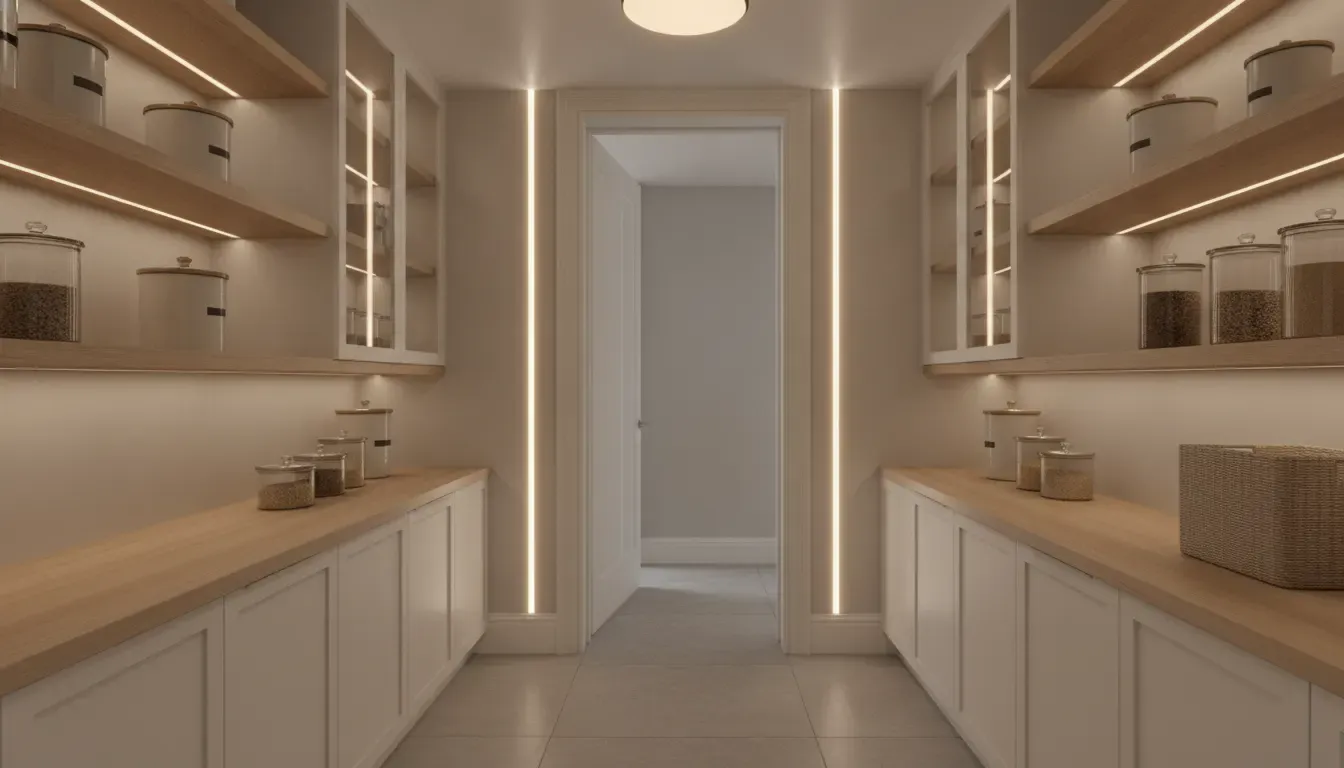
Door clearance is one of the most overlooked pantry lighting details. A fixture can be technically well placed and still be ineffective if the open door blocks it. Hinged doors, sliding doors, and double doors create different sight lines and different opportunities for switches or sensors.
Map the door’s full swing before selecting fixture locations. The open door should not cover a wall-mounted light, interfere with a vertical strip, or force you to reach behind the door to turn the system on. In a narrow pantry, confirm that the door and a person standing in the walkway can coexist comfortably.
A door switch can turn the light on automatically as the door opens. A motion sensor may be useful when the entry is unobstructed and the sensor can see into the full space. Manual switches remain a dependable option, especially when the pantry door is often left open during meal preparation.
How Should Lighting and Cabinetry Be Designed Together?
Lighting should be part of the cabinet conversation from the beginning. The cabinet layout determines where wires can run, where drivers can be stored, how fixtures can be concealed, and whether shelves can be adjusted later without exposing hardware.
Coordinate shelf thickness and fixture placement
Ask where a light will sit in relation to the shelf front, edge banding, doors, and adjustable hardware. A low-profile fixture can preserve usable clearance, but the channel still needs enough room for a clean installation and future access.
Plan the power and drivers before fabrication
Electrical planning is easier before the cabinet components are manufactured. Decide whether drivers will be placed above the pantry, in an adjacent cabinet, or in another accessible location. Avoid burying a component behind a fixed panel where maintenance would require removing the storage system.
Divide lights into useful zones
One switch for the entire pantry is simple, but separate zones can be more useful in a larger space. You may want shelf lights on when preparing food while leaving accent lighting off. Zone planning also makes it easier to manage a narrow pantry, a countertop area, and a tall storage wall as distinct functions.
Protect adjustability
Pantry storage changes as households change. Shelves may move when you replace a small appliance or begin buying different containers. Place lights so a reasonable shelf adjustment does not block the fixture or leave an exposed gap. This is one reason to plan lighting with the storage system instead of treating it as a last-minute accessory.
For a broader view of dimensions and clearances, compare the lighting plan with the kitchen pantry cabinet sizes guide. The purpose is not to force every pantry into one set of measurements. It is to confirm that storage depth, walking space, door movement, and light spread support one another.
Get a pantry layout that accounts for shelves, lighting, and door clearance
What Should Be on Your Pantry Lighting Planning Checklist?
Before ordering fixtures or finalizing cabinetry, walk through the following checklist with your designer or electrician:
- Identify the pantry type: Note whether it is a reach-in, narrow walk-in, corner pantry, or larger room.
- Mark the dark zones: Look at lower shelves, corners, deep runs, and areas behind open doors.
- Choose the lighting layers: Decide whether you need ambient, shelf-level, vertical, and accent lighting.
- Compare color samples: Review light beside the kitchen finishes and the cabinet material.
- Map the door swing: Check that the open door will not block a fixture, switch, or sensor.
- Choose control points: Select a manual switch, door switch, motion sensor, or a combination of zones.
- Plan access to drivers: Keep power components reachable without dismantling finished cabinetry.
- Review future adjustments: Confirm that shelves can move without creating shadows or exposing the lighting system.
- Check the installation sequence: Coordinate electrical work, cabinet fabrication, and final fixture installation.
These questions also help separate a lighting problem from a storage problem. If the back of every shelf is difficult to reach, more light may help you see the contents, but a different shelf depth or pull-out feature may make the pantry more useful. The strongest plan addresses both.
Talk through your pantry lighting options with a custom storage designer
What Do Homeowners Ask About Pantry Lighting?
Do pantry shelves need lights under every shelf?
Not always. A small pantry with shallow shelves may need only one or two well-placed zones. A tall or deep pantry often benefits from more consistent shelf-level lighting because each shelf can cast a shadow over the one below it. The right number depends on shelf spacing, finish, depth, and the position of the general light.
Are LED strips a good choice for pantry shelves?
LED strips can be a practical choice because they are slim and can be concealed near a shelf edge. They still need the right diffuser, power plan, and placement. Review the fixture in the actual cabinet design so it does not interfere with adjustable shelves or shine directly into the room.
Should pantry lights turn on when the door opens?
A door switch is convenient when the door closes reliably and the switch can be installed without interference. A motion sensor can provide hands-free operation, while a manual switch offers a familiar fallback. Discuss how the pantry is used before choosing the control method.
Can lighting be added after pantry cabinets are installed?
Some surface-mounted options can be added later, but a retrofit may leave visible wires, reduce shelf clearance, or make it difficult to hide drivers. Planning during cabinetry design usually creates a cleaner result and gives you more choices for fixture placement and controls.
How can I make a dark pantry easier to use without changing the cabinets?
Start by identifying whether the problem is insufficient general light, shelf shadows, glare, or an obstructed door. A temporary light can help you test the location before committing. If the issue comes from deep shelves or poor access, pair the lighting change with a storage review rather than relying on brightness alone. For ideas that connect visibility with daily use, see this guide to organizing a kitchen pantry and the recommendations for deep pantry shelves.
Ready to Make Every Pantry Shelf Easier to Use?
A pantry works best when lighting, cabinetry, access, and daily routines are planned as one system. Creative Closets designs custom pantry storage for homeowners across King and Pierce Counties, with an in-home design process that lets you review the layout in the space it will serve.
Schedule your free pantry design consultation