

Good laundry room organizers in Maple Valley make the work easier to move through, from dropping off a load to putting clean clothes away. The right plan does more than add shelves: it gives each task a place, keeps everyday supplies within reach, and makes better use of the room you already have.
Talk with a closet expert about your laundry room
Start by noticing what happens in the room on a normal week. Do clothes collect in a basket beside the washer? Is there a spot to fold, or do clean items travel to another room? Are detergent bottles taking over the machines? These everyday details reveal what the storage needs to support. A custom plan should fit the routine, the available wall space, and the way people move through the room.
What should laundry room organizers make easier?
Think about the laundry process as a series of small jobs. Sorting, washing, drying, folding, hanging, and putting items away each need room. If one job has no clear landing place, piles often migrate to the floor or nearby surfaces. Set up storage around those jobs rather than choosing cabinets first and figuring out their purpose later.
Walk through a typical load and list the items you reach for at each stage. That might include hampers, detergent, stain treatment, dryer sheets, a drying rack, hangers, cleaning cloths, and spare towels. Note which supplies are used often and which are only needed occasionally. Daily products belong close to the machines; extra linens and seasonal items can go higher or farther away.
- Sorting: Give light, dark, delicate, or household items a defined place before washing.
- Washing and drying: Keep the products used for each machine together, while leaving controls and doors clear.
- Folding: Create a counter or other stable surface where clean items can be sorted and folded.
- Hanging: Reserve a rail or hook area for items that need to air-dry or go straight onto a hanger.
- Putting away: Assign reachable storage to towels, sheets, and the supplies that need replenishing.
A custom laundry room and cabinet plan can bring these functions together in one layout. Even in a compact room, a clear sequence can reduce backtracking and keep work surfaces available.
How can you plan sorting, folding, and hanging zones?
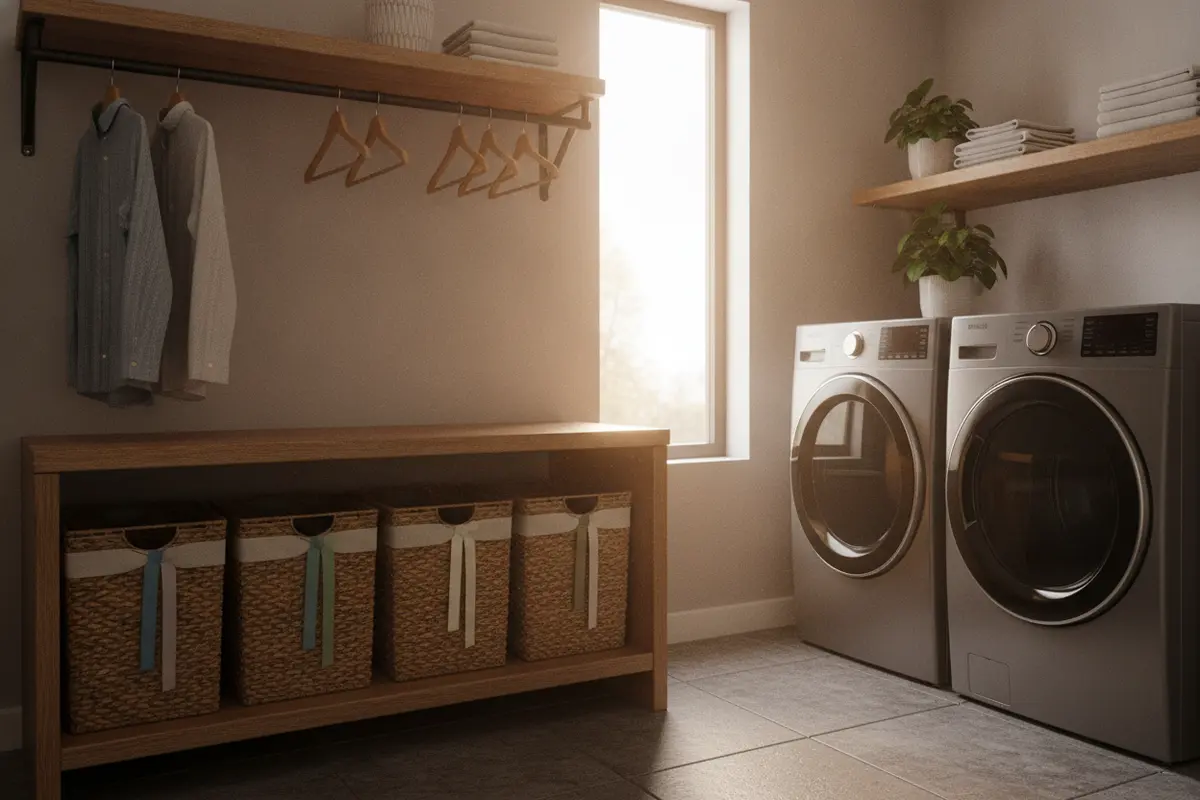
Sorting works best when the containers are easy to reach and sized for the household’s routine. A row of baskets can separate lights, darks, and delicates, while a single hamper with removable bags may work better where floor space is limited. Consider where each container will be loaded and emptied. A basket should not block the washer door, the path to a closet, or access to a utility panel.
For folding, measure the available wall and the space needed to open appliance doors. A counter above front-loading machines may provide a useful work surface, but its depth and height should suit the machines and the person using it. If a permanent counter will crowd the room, a clear section of nearby countertop or a pull-out work surface may be a better fit. Keep enough open space to set down a full basket without covering the surface needed for folding.
Hanging storage is useful for shirts, damp garments, and items that should not go into the dryer. A short rail can fit under an upper cabinet or across a wall that would otherwise be unused. Check the rail’s position against cabinet doors, shelves, and the swing of the laundry-room entry door. Put hooks at a comfortable height and keep a few hangers close by so wet items do not have to cross the room.
| Zone | Storage option | Works well for | Planning check |
|---|---|---|---|
| Sorting | Separate baskets or pull-out hampers | Dividing clothing by wash type or household member | Can baskets be removed and carried easily? |
| Folding | Counter or clear work surface | Folding, stacking, and sorting clean items | Do doors and walkways remain clear? |
| Hanging | Wall rail, short rod, or hooks | Air-drying and freshly washed garments | Is there clearance for garments and hangers? |
| Supplies | Cabinet, drawer, or shallow shelf | Detergent, stain products, and daily tools | Can frequently used items be reached safely? |
| Linens | Upper cabinet or adjustable shelf | Towels, sheets, and extra household linens | Are shelves sized for folded stacks? |
The best combination depends on the room’s actual dimensions and routine. For shelf-based setups, these laundry room shelving ideas can help you think through where open storage belongs. Open shelves are convenient for baskets and frequently used items, while doors can make a compact room look calmer by hiding packages and mixed containers.
Where should detergent and cleaning supplies go?
Store detergent and stain products close enough to use without interrupting the wash, but do not let them take over the folding area. A cabinet near the machines can keep bottles together and out of sight. A shallow shelf may suit a small collection of daily products. Drawers or pull-out storage can make smaller items easier to see, especially when bottles would otherwise get lost at the back.
Plan for the actual containers you use, including their height and width. Leave room for a refill bottle or a different package size rather than filling every shelf to the edge. Group similar supplies, such as stain care, dryer products, and laundry bags, so it is easy to spot what needs replacing. Keep products in their original containers and follow the label directions for storage and handling. If children or pets use the room, place products in a secure location that fits your household’s safety needs.
Cleaning tools need their own home too. A narrow vertical cabinet, a wall-mounted holder, or hooks on the back of a door can make room for a broom, mop, or duster without sacrificing a full shelf. Before adding hooks or racks, check that they will not interfere with appliance ventilation, doors, or access to plumbing and electrical points. Do not store products where a leak or splash is likely to damage them.
Small accessories can make daily tasks more convenient. Consider a place for lint rollers, clothespins, mesh wash bags, and a small supply of hangers. The closet accessory options offer examples of add-ons that can support a specific routine; the useful choice is the one that solves a real problem in this room.
How can you use vertical and awkward space?
Laundry rooms often have more usable wall height than floor area. Upper cabinets or shelves can hold spare towels, extra detergent, or seasonal items, leaving the lower zone free for daily tasks. Keep a step stool in mind if you plan to store anything above comfortable reach. Frequently used supplies should not require stretching or climbing.
Look closely at spaces that appear too narrow or irregular to use. A slim gap beside a washer may fit a vertical pull-out for smaller supplies. The wall above a hamper can hold a shelf or hooks. A corner may be better suited to a tall cabinet than a wide counter. The space above a machine can work for storage if there is suitable clearance and the appliances can still be used and serviced as needed.
Doors, corners, pipes, and sloped ceilings can make a standard layout feel awkward. Measure around those features rather than ignoring them. Record the full width, height, and depth available, and note door swings, trim, outlets, and any obstructions. A narrow section can become useful when its storage is designed for the shape of the space instead of forcing a full-size unit into it.
Vertical storage should still be easy to maintain. A deep upper shelf can hide items behind other items, so use clearly assigned sections or baskets that can be pulled forward. If the room is narrow, avoid projecting shelves at shoulder height where they can catch clothing or interrupt the walkway. For ideas that extend beyond the laundry area, see this guide to planning a custom linen cabinet.
How should you store linens and folded items?
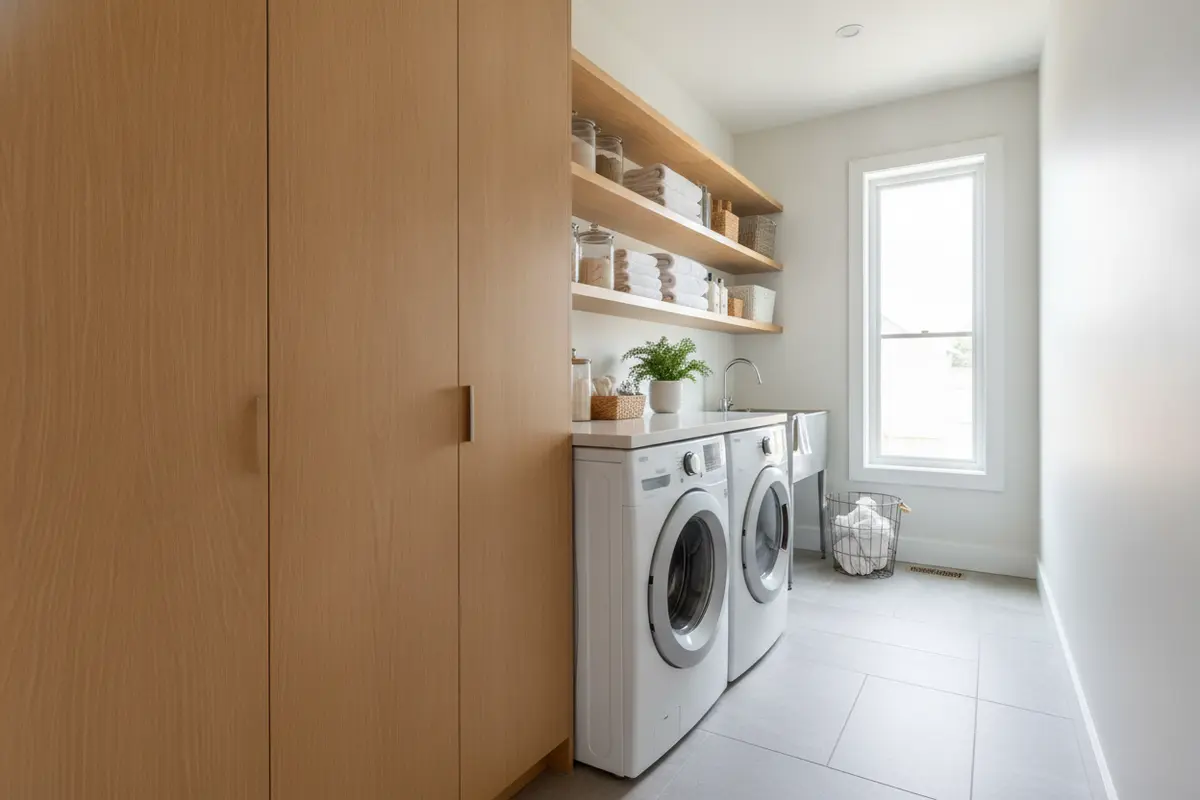
Towels and sheets need storage that matches how they are folded and used. Measure a typical stack before choosing shelf spacing. Adjustable shelves let you change the height when the mix of towels, sheet sets, or household items changes. If several people share the room, label or dedicate sections so clean items have a consistent destination.
Store the linens used most often at a comfortable height. Guest bedding and seasonal items can go higher, while heavy towel stacks are easier to reach lower down. Open shelves make it quick to grab a folded towel, but closed cabinets can reduce visual clutter. A combination can work well: closed storage for extra packages and open or easily accessible storage for the linens used every day.
Not every home has space to keep all household linens in the laundry room. If the room is also a passageway or utility area, avoid filling it until there is no clear place to stand or fold. A separate linen closet shelving plan may be a better place for overflow, while the laundry room stays focused on washing and daily-use items.
Which finishes make sense for a working laundry room?
A laundry room is a hardworking space, so choose surfaces with regular use in mind. Look for cabinetry and shelving with a smooth, cleanable surface, and ask how the proposed materials should be cared for. Spills, damp hands, detergent residue, and frequent contact can all affect how a surface looks over time. A finish that is easy to wipe down can be simpler to maintain than a textured surface that traps dust.
Think about the room’s light and nearby finishes as well. Pale colors can help a small space feel brighter, while a contrasting counter can make the folding zone easy to identify. Bring the choice back to practical questions: Will it coordinate with nearby cabinetry? Will marks be easy to notice and clean? Does the finish suit the level of use? Ask to see samples in the room’s lighting before settling on a final selection.
Pay attention to edges and seams near water sources, and ask what care is recommended for the chosen material. Keep enough clearance around machines to manage routine cleaning and service. A well-planned layout is not only about how it looks on installation day; it should remain easy to reach, wipe, and use as laundry routines change.
How do you compare laundry room storage options?
Compare each option against the job it needs to do rather than choosing by appearance alone. Open shelves make frequently used baskets visible and accessible, but they need regular tidying. Cabinets can conceal supplies and give the room a more unified look, but items behind doors still need an orderly arrangement. Drawers can keep small items together, while tall cabinets use vertical space for tools and bulkier supplies.
- Start with measurements: Record wall dimensions, appliance sizes, door swings, and clearances before sketching a layout.
- List what must fit: Include hampers, bottles, linens, cleaning tools, hangers, and any folding surface.
- Separate daily and occasional use: Keep everyday products reachable; place overflow and seasonal items in less prominent storage.
- Check movement: Make sure a person can load and unload machines, open doors, carry baskets, and stand at the folding area.
- Plan for upkeep: Consider how each surface will be cleaned and how shelves or containers can be adjusted later.
If you are also considering storage elsewhere in the home, explore custom closet systems and built-ins or entryway storage ideas for ways to give other daily-use items a defined place. For laundry-area-specific cabinets, the options described on the laundry room service page are a useful starting point.
What should you prepare before a design consultation?
A few details can make a planning conversation more useful. Take rough measurements of the walls and appliances, photograph the room from a few angles, and note where doors, outlets, plumbing, and vents are located. Make a short list of what feels inconvenient now and what you would like to change. For example, you may need more room for sorting, a surface for folding, or a place to keep cleaning tools off the floor.
Gather a sample of the items that are hardest to store, such as a tall detergent container, a bulky hamper, or an oversized towel stack. This helps establish the scale and access the storage needs to accommodate. It can also be helpful to note who uses the room and whether children or pets affect where supplies should be kept.
Creative Closets offers custom laundry room and cabinet solutions in its service area. To discuss the room and next steps, contact the team. You can also check the service-area information for coverage details.
Request a conversation about your laundry room
Frequently Asked Questions
What should go above a washer and dryer?
Use the wall above appliances for storage only when the layout allows adequate clearance and comfortable access. A shelf or cabinet can hold supplies and spare linens, while a counter may provide a folding surface over front-loading machines. Check the appliance instructions and the room’s clearances before finalizing the plan.
How can I organize a small laundry room?
Keep the floor and walking path open, assign a place to sorting, and use wall height for items that are not needed every day. A compact hamper, shallow storage, and a short hanging rail can be more useful than several deep shelves. Measure door swings and appliance access so added storage does not make routine work harder.
Where should detergent and cleaning products be stored?
Keep daily laundry products close to the machines in a cabinet, drawer, or shelf sized for the containers. Follow product labels and household safety needs, and keep containers closed and secure. Store cleaning tools separately in a narrow cabinet, on a holder, or on hooks where they can dry and remain easy to reach.
Can one laundry room hold linens as well as laundry supplies?
Yes, if the available space and routine support both. Put daily towels and sheets in accessible storage and reserve higher or less convenient shelves for extras. If linens crowd out sorting or folding space, keep overflow in a separate linen closet and let the laundry room focus on the tasks done there most often.
A useful laundry room plan gives every task a sensible place without blocking movement or access to appliances. With a careful look at what you store and how you work, organizers can make the room easier to use day after day.