

A well-planned handbag organization closet keeps each bag supported, visible, and easy to reach without turning a beautiful collection into a crowded row. The best layout considers bag size, how often you carry each piece, protection from dust and light, and the shelf, drawer, or cubby that fits the way you use your closet.
Schedule a free in-home design consultation for your custom closet.
What Should a Handbag Organization Closet Solve?
Handbags need more than a place to sit. A structured tote, soft leather shoulder bag, compact evening bag, and tall work bag each occupy space differently. A storage plan that treats every piece the same can waste shelf height, hide the bags you use most, and leave smaller bags leaning against larger ones.
A useful handbag zone should solve four daily problems:
- Visibility: You can see enough of each bag to choose it quickly.
- Support: Bags stand upright or rest in a way that helps them keep their shape.
- Protection: Less-used pieces have a sensible place away from dust, direct sunlight, and unnecessary handling.
- Access: Frequently carried bags are positioned at a comfortable height with enough room to remove one without disturbing the others.
These decisions are easier to make when the closet is designed around your actual collection rather than filled with standard compartments first. Start by noting the bags you carry weekly, the pieces reserved for special occasions, and the shapes that need the most support.
How Do You Sort Handbags by Size and Frequency?
Begin with use, then refine the layout by size. Frequency determines where a bag belongs, while dimensions determine how much vertical and horizontal space it needs. This simple order prevents the most convenient shelves from being assigned only to the largest items.
Place everyday bags in the easiest reach zone
Keep the bags you carry most often between approximately waist and eye level. This area is comfortable to scan and does not require reaching over other belongings. Leave a little breathing room around each bag so a handle can be lifted without catching on an adjacent piece.
Group medium bags by silhouette
Shoulder bags, satchels, and structured handbags are easier to compare when similar shapes share a shelf. If a row contains very different depths, the smaller pieces may disappear behind a larger bag. A shallow divider, adjustable shelf, or separate cubby can preserve visibility without adding visual clutter.
Give oversized bags their own footprint
Totes and larger work bags may need more shelf depth and clear height than compact handbags. Do not force them into a tight row. A dedicated lower shelf can make heavier pieces easier to lift, while an open vertical section may work better for a tall tote that cannot sit comfortably beside smaller bags.
Reserve upper storage for occasional pieces
Formal clutches, seasonal colors, and bags used only a few times each year can occupy higher or less prominent shelves. Keep them identifiable, and avoid stacking them so high that retrieving one requires moving the entire group. If a bag has a delicate finish or specific care needs, leave room for its protective storage.
Which Shelves and Cubbies Keep Bags Supported?
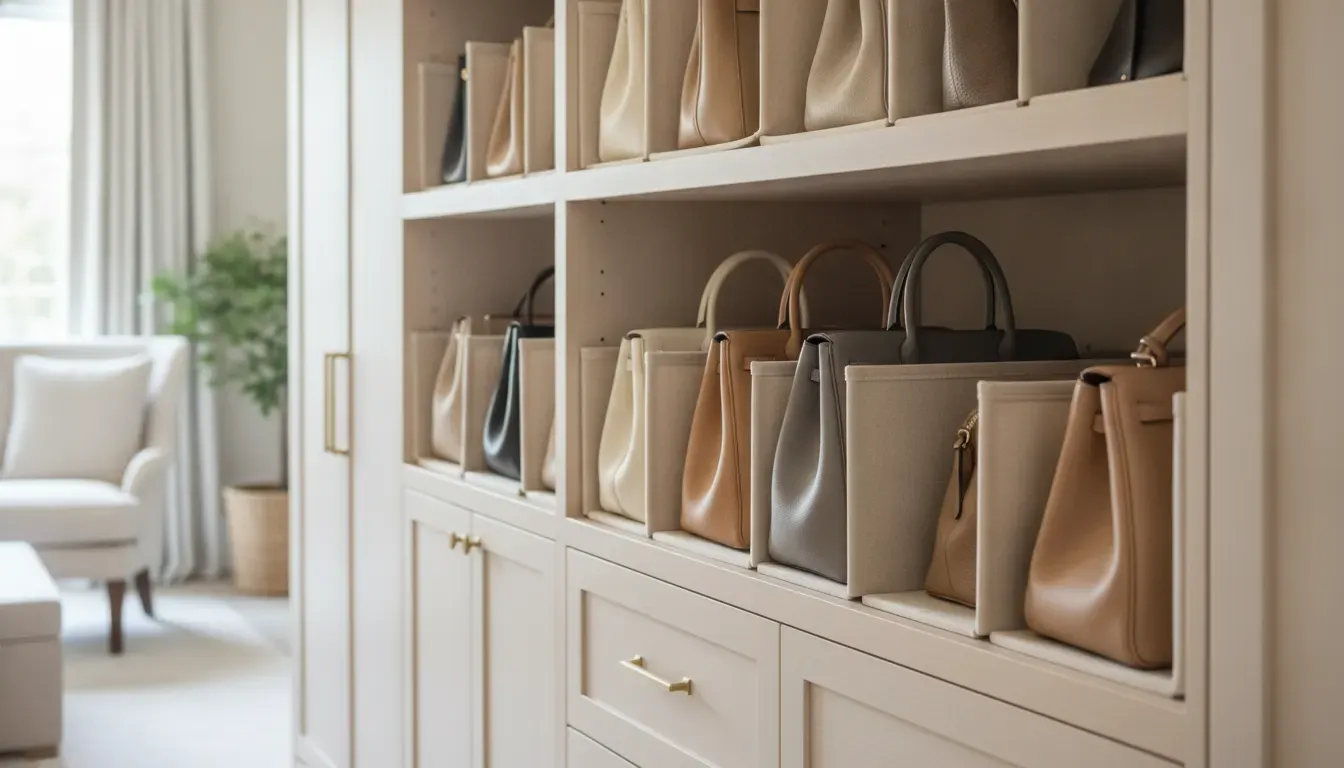
Open shelves are often the most flexible foundation for a handbag organization closet because they keep bags visible and allow the spacing to change as your collection changes. The key is not simply adding more shelves. It is choosing shelf widths, depths, and clearances that prevent bags from leaning into one another.
Consider these layout details during design:
- Adjustable shelf spacing: Different bags can receive the height they need instead of leaving unusable gaps.
- Stable shelf surfaces: A bag should sit flat and remain balanced when a neighboring piece is removed.
- Moderate depth: A shelf that is too deep can hide the back of a bag and make retrieval awkward.
- Defined bays: Cubby-like sections can prevent soft bags from spreading into the next position.
- Clear sightlines: Position shelves so handles, colors, and silhouettes remain easy to identify from the closet entrance.
For soft or slouchy handbags, a defined bay or upright support can help the piece maintain a cleaner profile. For rigid bags, open spacing may be enough. The right answer depends on the bag, not on a one-size-fits-all storage rule.
How Can Drawers Protect Smaller Handbags and Accessories?
Drawers are valuable when visibility from an open shelf is not the main priority. They can keep compact bags, wallets, straps, and small accessories together while reducing visual noise in the closet. A drawer also gives delicate pieces a more contained environment than a crowded open shelf.
Use drawers selectively. A deep drawer can make small clutches difficult to see if pieces are placed on top of one another. Divided or shallower storage can make a better home for evening bags and accessories that need separation. Consider placing these drawers near the open handbag shelves so the complete outfit and its accessories stay within one zone.
Drawer placement matters as much as drawer size. Everyday accessories should sit at a comfortable height, while occasional pieces can be stored lower or higher. If a drawer will hold a heavier collection, ask your designer how the drawer box, runners, and surrounding cabinetry will be specified for the intended use.
Creative Closets offers custom closet drawers as part of a broader storage plan. Combining drawers with open shelving can give each category a deliberate home without making the closet feel overbuilt.
What Is the Best Way to Display Handbags Without Overcrowding?
Display should make selection easier, not turn the closet into a showroom that is difficult to maintain. A balanced arrangement gives the eye enough repetition to feel orderly while preserving clear differences between bags.
Use color as a secondary organizing system
After sorting by use and size, you can group bags by color family. Neutrals, dark tones, and accent colors may each have their own section. Color grouping works best when it does not force a bag into an inconvenient location. A frequently used black tote still belongs in the easy-reach zone even if the rest of the black collection is elsewhere.
Keep handles and silhouettes visible
Face bags consistently when possible, but do not sacrifice their support for a perfect display. A slight angle can make a handle easier to see. Leave enough space to remove one item cleanly. If you need to pull several bags forward to reach the one behind them, the shelf is carrying too much.
Create a transition space for the bag you are carrying
A small open shelf or landing area can prevent a daily bag from being placed on a chair, floor, or dresser. This temporary position is useful when you return home and when you are preparing to leave. It also keeps the main collection from being disturbed every day.
Explore custom closet accessories that can make handbag storage easier to use.
How Do You Protect Handbags From Dust, Light, and Loss of Shape?
Protection begins with thoughtful placement. Keep bags away from direct sunlight when the closet layout allows it, especially if a material or color is sensitive to prolonged exposure. A door, drawer, or interior storage box may be appropriate for pieces that are used less often, while everyday bags can remain open for convenient access.
Use the original dust bag when the manufacturer provides one, and avoid compressing a handbag into a space that is too small. For pieces that need structure, use the support method recommended for that bag. Do not assume that filling every bag tightly is always helpful. The goal is to support the shape without stretching seams, handles, or closures.
Keep clean and dry conditions in mind as well. A closet should have enough circulation around stored items, and bags should be put away dry after use. If a piece needs specialized cleaning or restoration, follow the care guidance for that material rather than applying an unverified product.
A custom design can make these habits easier because protection is built into the location. Enclosed drawers, adjustable shelves, and carefully selected clearances can separate less-used pieces from the daily rotation without hiding the whole collection.
How Should a Handbag Zone Fit Into a Custom Closet?
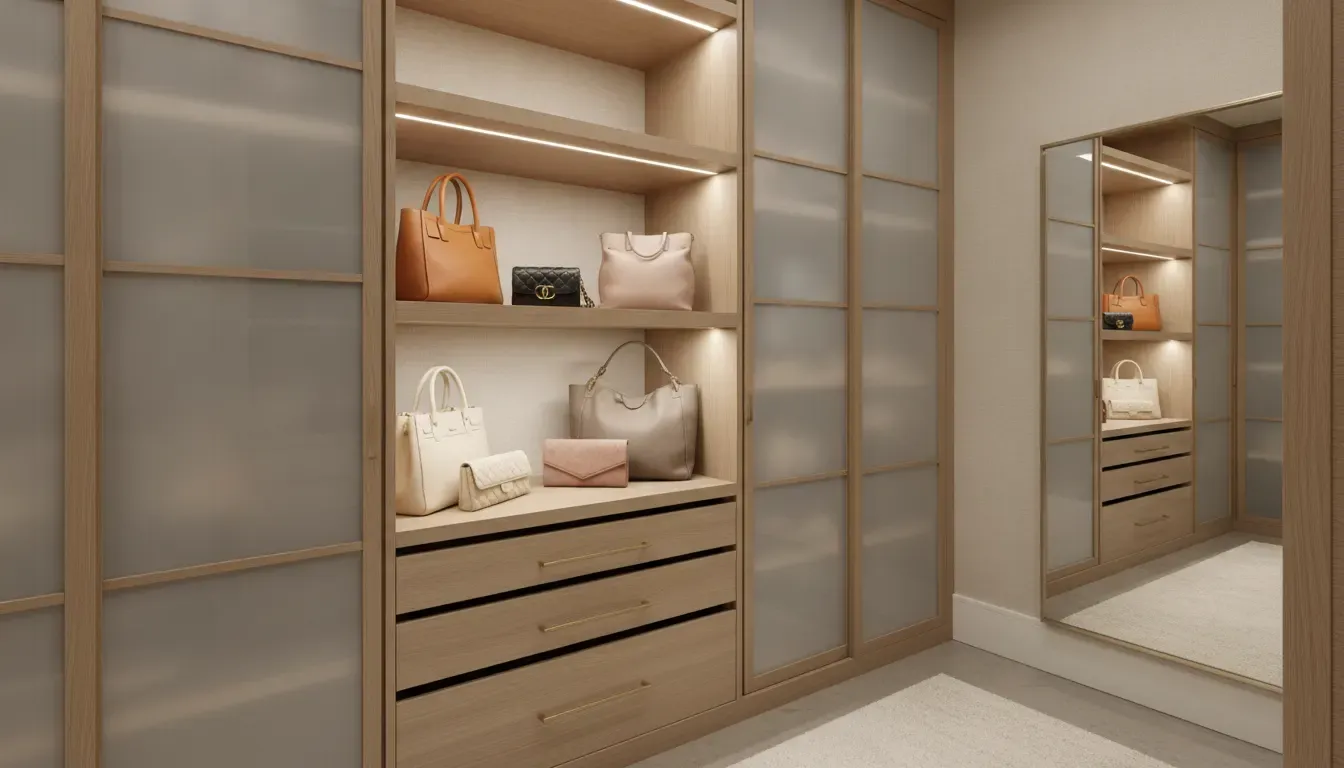
A handbag section should connect naturally to the rest of the dressing routine. If you choose a bag after selecting clothing, place it near the relevant hanging and drawer zones. If you prepare accessories in front of a mirror, keep the collection within that same visual path. The best storage plan reduces extra steps between choosing an item and leaving the room.
During a design consultation, bring or measure the bags that create the greatest layout challenge. Note the tallest tote, widest structured bag, smallest clutch, and any piece that needs enclosed storage. These details help a designer think about clearances instead of estimating from a generic category.
Creative Closets designs storage around the home and the way each client uses it. Its custom walk-in closet service can incorporate shelving, drawers, hanging space, and accessories into one coordinated plan. For a smaller reach-in space, the same principles apply, but every inch of vertical and horizontal room needs to work harder.
What Should You Ask Before Choosing Handbag Storage?
A good consultation should answer practical questions before the layout is finalized:
- Which bags should be visible every day, and which can be stored more discreetly?
- Will each shelf support the depth and weight of the items assigned to it?
- Can shelf heights change if the collection grows or the routine changes?
- Where will smaller clutches, straps, wallets, and other accessories go?
- Can the design protect occasional pieces while keeping everyday bags easy to reach?
- How will the handbag section connect to clothing, shoes, jewelry, and the mirror?
- What materials, finishes, and hardware will create a cohesive look with the rest of the closet?
These questions move the conversation beyond the number of shelves. They help establish a storage system that remains useful after the initial organization project is complete.
Plan a handbag organization closet around your collection and daily routine.
Frequently Asked Questions
What is the best way to organize handbags in a closet?
Sort handbags first by how often you use them, then by size and shape. Keep everyday bags at a comfortable height, give larger pieces enough shelf depth, and use drawers or enclosed storage for smaller or occasional items that benefit from protection.
How do you keep handbags upright on a shelf?
Use appropriate shelf spacing, defined bays, or supports that fit the bag’s shape. Avoid packing bags tightly together. A design professional can help select clearances that keep soft and structured pieces stable without forcing them into an unsuitable position.
Should handbags be stored on shelves or in drawers?
Open shelves work well for bags you want to see and reach quickly. Drawers can be useful for smaller, delicate, or less-used pieces and for related accessories. Many closets benefit from a combination of both rather than relying on one storage type.
How much space should be left between handbags?
Leave enough room to lift a bag by its handle and remove it without pulling neighboring pieces forward. The exact clearance depends on the bag’s width, depth, structure, and handle design, so measure the collection instead of applying one fixed spacing rule.
Can a custom closet include handbag storage?
Yes. A custom closet can combine adjustable shelving, cubbies, drawers, and accessories to create a dedicated handbag zone. The layout can be coordinated with clothing, shoes, and other storage so the collection is convenient without taking over the room.
Ready to Create a More Considered Closet?
Your handbags should be easy to choose, comfortable to store, and protected when they are not in rotation. Creative Closets provides personalized design services for homeowners throughout King and Pierce Counties, including Bellevue, Redmond, Kirkland, and nearby communities. A conversation about your collection is the best starting point for a layout that feels polished and works every day.
Ready to Set Up Your Custom Handbag Storage? Schedule your free design consultation.