

A custom linen cabinet in Sammamish can make towels, sheets, and everyday supplies easier to find without taking over a bathroom or hallway. The best design starts with the items you plan to store, the space available, and the way people move through the room. A few careful decisions about shelf depth, airflow, access, and finish can help the cabinet feel like a natural part of your home.
Talk with a closet expert about your cabinet
Where should a linen cabinet go?
Start by looking at the route between the places where you use linens and the place where you want to store them. Bathroom towels are most convenient near the bath or shower, while bed sheets may make more sense near bedrooms. A cabinet outside a bathroom can also keep clean textiles away from routine splashes and leave more room for daily bathroom activity.
Walk the route while carrying a laundry basket or a stack of towels. Note doors that swing into the space, drawers that need to open, and places where people pass one another. A cabinet that fits on paper can still feel awkward if its doors block a doorway or its depth narrows a busy walkway. In a tight location, consider a shallower cabinet or a layout with drawers and shelves that do not project into the room when closed.
Possible locations include an unused wall near a bathroom, a hallway between bedrooms, or a laundry area. Compare the convenience of each spot with the room’s available wall space and access. For a related room-planning example, see custom laundry room cabinets. If the cabinet is part of a larger home storage plan, custom closet systems can help you consider how storage needs connect across rooms.
How deep should the shelves be?
Shelf depth should follow what you intend to store, not simply the maximum depth that fits the wall. A folded hand towel, a stack of bath towels, a sheet set, and a tall bottle all need different amounts of room. Measure the largest folded item and the tallest container you expect to keep, then leave enough room to lift items off the shelf comfortably.
Very deep shelves can hide small items at the back and make stacks harder to reach. Shallow shelves are easier to scan, but may not hold bulky towels or folded bedding. If your storage needs vary, use a mix of shelf depths or assign deeper sections to bedding and larger towel stacks while keeping everyday supplies on more accessible shelves. Check that the cabinet depth also works with nearby trim, doors, and the usable walking space.
Before choosing dimensions, try folding your usual towels and sheets the way you will store them. Measure the resulting stacks rather than relying on the size of the unfolded fabric. Include any bins or baskets you expect to use, since handles and rims take up space too. This small exercise makes a design discussion more specific and helps prevent a shelf plan that looks spacious but does not fit your actual items.
How can adjustable storage handle different items?
A linen cabinet often holds a changing mix: bulky bath towels, guest towels, spare sheets, washcloths, toiletries, and cleaning supplies. Adjustable shelves give you options when one category grows or changes. For example, a shelf can be repositioned to make room for a tall container, or the space between shelves can be reduced to keep short stacks from spreading out.
Think in zones instead of treating every shelf the same. Keep frequently used towels at an easy-to-reach height. Put spare bedding or occasional-use items higher, provided they remain safe and practical to lift. Lower shelves can hold heavier items or a basket for extra rolls and supplies. If several people use the cabinet, give each person or category a consistent place so items are easier to return.
Drawers can contain small items such as washcloths, toiletries, or travel supplies. Open shelves make folded linens visible, while doors can conceal mixed or less visually uniform contents. A combination is often useful: open or easily accessed shelves for towels, with closed storage for smaller items. Consider storage accessories and add-ons if dividers, pull-outs, or baskets would make your categories easier to maintain.
How can you keep towels fresh and accessible?
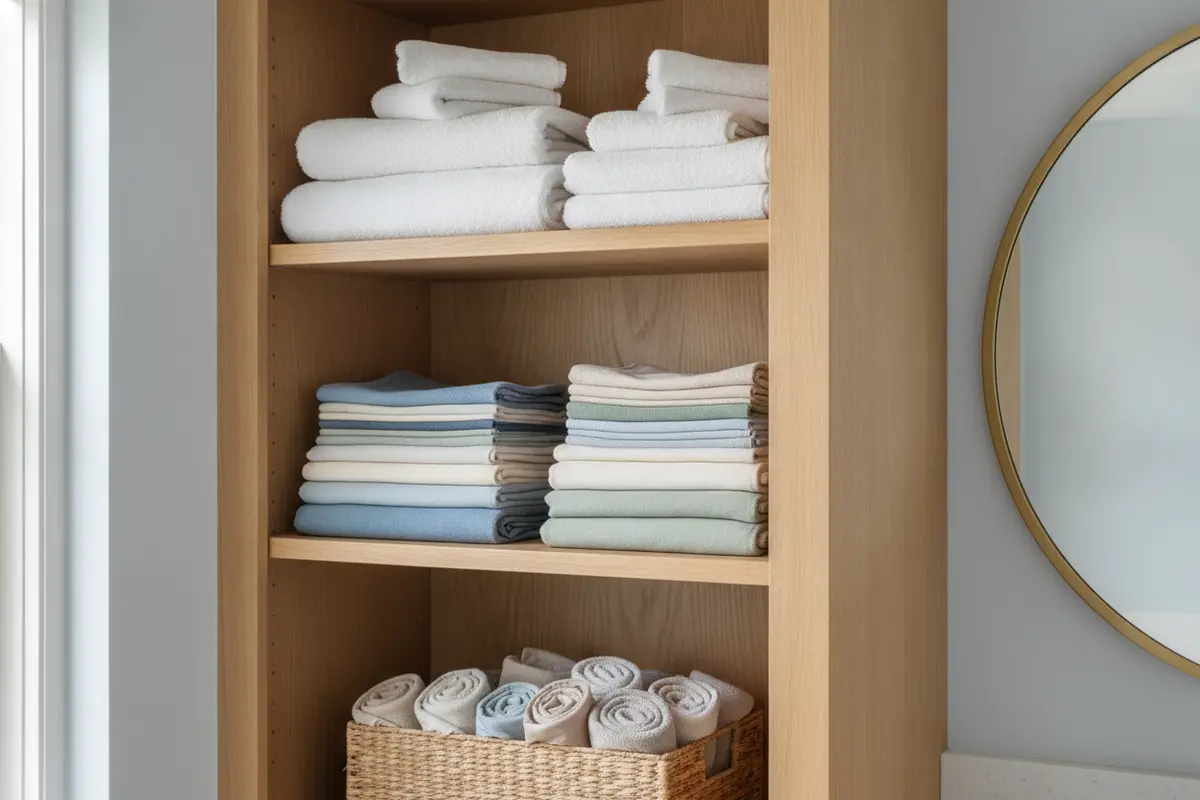
Airflow matters when storing towels, especially if they are put away before they are fully dry. Let used towels dry completely before folding and storing them. Avoid packing shelves so tightly that air cannot move between stacks. Leave a little breathing room around folded linens, and do not use a linen cabinet as a place to store damp towels.
Choose shelf spacing that lets you lift a stack without scraping knuckles against the shelf above. A practical stack should come out in one motion rather than requiring you to pull out everything on the shelf. If the household uses several towel sizes, group them by type and keep the most frequently used ones at comfortable reach. A basket can corral washcloths, but it should not become so full that the contents are difficult to retrieve.
Keep any bathroom ventilation in working order, and consider how close the cabinet will be to sources of water or steam. The cabinet’s location and the household’s habits both affect how well linens stay fresh. Ask a designer how the proposed placement, door style, and shelf arrangement suit the room. For wider guidance on choosing and arranging linen storage, you can also read the custom linen cabinet buyer’s guide.
Which finish will coordinate with the room?
A linen cabinet can blend in with surrounding trim or become a quiet focal point. Look at nearby doors, cabinetry, flooring, wall color, and hardware before selecting a finish. Bring reference photos or a small sample of a nearby finish to a design conversation so that comparisons happen in the room’s actual light. A finish that looks warm beside one surface may read cooler next to another.
Decide whether you want the cabinet to match existing storage closely or complement it without being identical. Matching can create a continuous built-in effect. A complementary finish can help a new cabinet feel intentional when the surrounding furniture or millwork varies. Also consider how much of the cabinet will be visible from adjoining rooms and whether its color should recede or draw attention.
Hardware, door style, and visible shelf edges contribute to the overall look. Keep the number of finishes manageable, and compare samples side by side before settling on a combination. The guide to matching finishes and colours at home offers additional questions to consider when coordinating storage with existing surfaces.
What should you check for comfortable access?
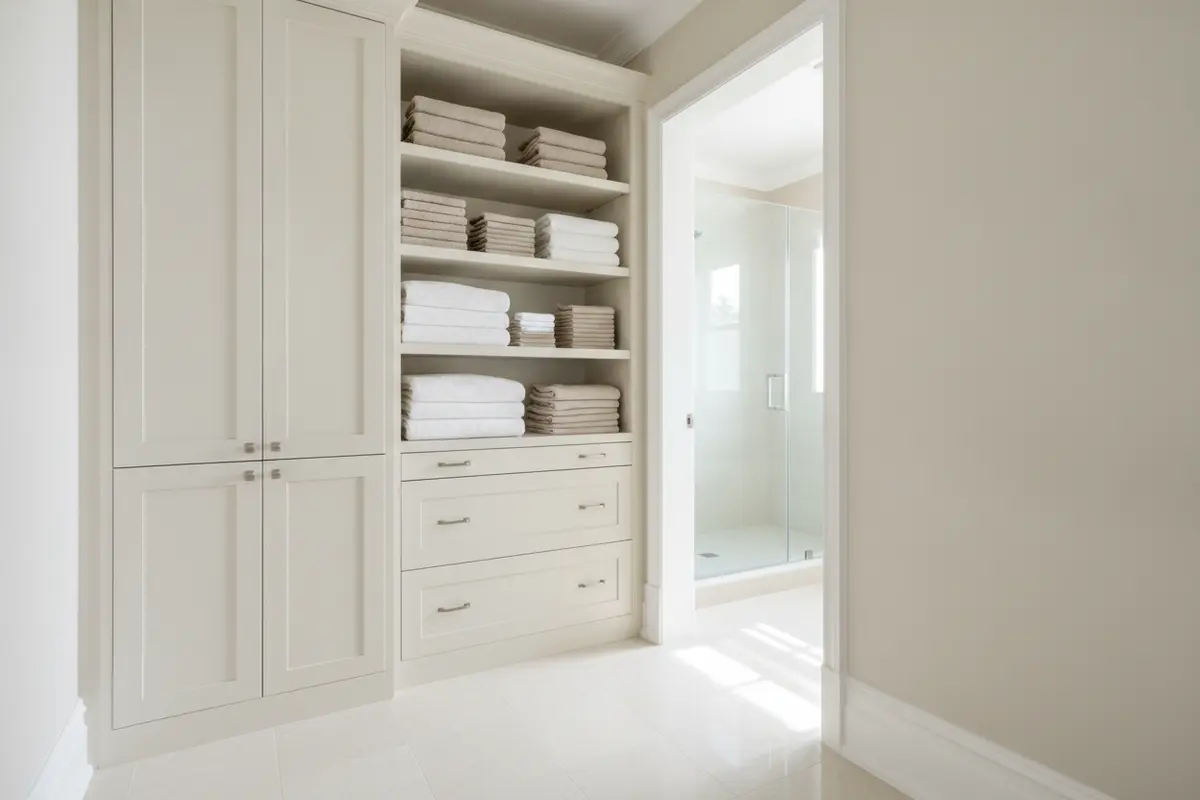
Open the cabinet in your mind’s eye: where will you stand, which hand will reach in, and what else may be happening in the room? A hinged door needs clear swing space. Drawers need room to extend without colliding with a vanity, doorway, or another cabinet. Open shelves provide quick visibility, but their contents are on display. Closed fronts create a calmer look and can help keep dust off stored linens.
Plan everyday items between comfortable reach and eye level where possible. Reserve upper areas for lighter, less frequently used items. Avoid putting heavy bedding in a high position that is difficult to reach safely. If more than one person will use the cabinet, consider their different reach and preferred routines. A pull-out or basket may help with a lower shelf, but confirm that it can be opened fully in the available space.
Take note of baseboards, switches, outlets, vents, and door casing before deciding where a cabinet can sit. These details can affect whether the cabinet is set against the wall, how wide it can be, and whether its doors or drawers operate freely. Include them in your measurements rather than assuming the wall is an uninterrupted rectangle.
What should you compare before choosing a layout?
Use this comparison to think through the trade-offs. A custom design can combine approaches, so the right choice depends on the items you store and the room’s clearances.
| Storage choice | Works well for | Check before deciding |
|---|---|---|
| Shallow shelves | Small folded linens and easy-to-see supplies | Whether bulky towels or bedding fit without overhanging |
| Deeper shelves | Large towel stacks, sheet sets, and baskets | Whether items at the back remain easy to reach |
| Adjustable shelves | Storage needs that may change over time | How shelf positions align with your tallest items and stacks |
| Drawers or pull-outs | Small supplies and items that are hard to manage in a stack | Clearance for full extension and convenient access |
| Closed doors | A tidy, concealed appearance and protected contents | Door swing, nearby traffic, and access to daily items |
What should you measure before a design consultation?
Measurements do not need to be perfect to make a consultation more productive. A clear set of notes, photographs, and examples of what you plan to store can help explain the space and your priorities. Record the following before discussing a cabinet:
- Wall width and height: Measure the available wall area, including any changes in ceiling height or angled sections.
- Usable depth: Note how far a cabinet can extend without narrowing a walkway or interfering with nearby fixtures.
- Obstructions: Mark door trim, baseboards, switches, outlets, vents, plumbing access, and other features that cannot be covered.
- Door and drawer clearance: Measure the space needed for nearby doors to swing and for drawers to open.
- Stored items: List towel types, sheet sets, baskets, bottles, and supplies. Measure the bulkiest folded stack and tallest container.
- Daily routine: Note which items are used often, who needs to reach them, and whether the cabinet serves one room or several.
- Finish references: Take clear photos of adjacent surfaces in daylight and identify finishes you want to match or complement.
Use painter’s tape to mark the proposed width and depth on the floor or wall, where appropriate, and walk around the marked area. This can reveal a pinch point that is difficult to spot in a sketch. Photograph the space from the doorway and from the location where the cabinet may stand. If you are planning other storage as well, review the service-area information and bring a list of the rooms you want to discuss.
What questions should you ask during the consultation?
Use the conversation to test how well the proposed design fits your real routines. Useful questions include:
- Can the design accommodate my largest folded towels, bedding, and containers?
- Which shelves can be adjusted, and how will the layout handle changes in what I store?
- Will the cabinet doors or drawers interfere with the bathroom door, vanity, or hallway traffic?
- Where should everyday items go so they are easy for everyone in the household to reach?
- How can we allow enough room for linens to stay loosely stacked and accessible?
- Which finish options work with the trim, cabinets, and flooring already in this room?
- Are there wall features or access points that should remain clear?
- How will the cabinet’s placement affect the rest of the room?
Bring your measurements and photos, but also describe the problem you want the cabinet to solve. For example, you may need to move linens closer to a bathroom, separate guest bedding from daily towels, or replace stacks spread across several shelves. A clear priority helps the designer compare layout choices and focus on the changes that will make the cabinet useful every day.
Schedule a conversation about your storage plans
Frequently Asked Questions
Can a linen cabinet fit in a narrow hallway?
Possibly, if its depth and door or drawer operation leave a comfortable path through the hall. Measure the usable width and test the proposed cabinet depth against the door swings and normal foot traffic before choosing a layout.
Should all linen cabinet shelves be the same depth?
Not necessarily. Mixed depths can give bulky towels or bedding more room while keeping smaller supplies visible and close at hand. Base the choice on measured items and the cabinet’s available space.
How much should I store in the cabinet?
Start with the items you use and replenish, rather than filling every shelf simply because it is available. Group linens by type, leave room to remove stacks easily, and reconsider items that belong closer to another room.
What if I am not sure where the cabinet should go?
Compare the locations where linens are used, the available wall space, and the route between rooms. Photos and notes about daily routines can help a designer evaluate the trade-offs with you.
A well-planned linen cabinet makes everyday storage easier while respecting the space around it. With measurements, a clear list of priorities, and a thoughtful layout, you can make choices that suit your Sammamish home and daily routine.