

Custom closet finish colors are easier to choose once you stop treating the catalog as the decision. A warm white, a soft gray, and a wood tone can all look right on a screen and wrong in the closet. Start with the light in the room, the finishes you cannot change, and the door style you will actually see every morning. Then bring two or three samples to the visit, not a dozen.
How do you choose custom closet finish colors?
Pick the finish for the room you have, not for a photo of a different room. Closet light is usually weaker than bedroom light, and a color that looks clean in a bright kitchen can look flat or yellow once it sits under a shelf. The useful first step is to name the fixed surfaces around the closet, then test a short list against those surfaces.
Write down three things before you open a color chart. Note the flooring just outside the closet, the wall paint you will keep, and any furniture or trim that will stay. If the bedroom has a warm oak dresser, a cool gray closet can look like it belongs to another house. If the walls are a bright white and the floor is pale, a deep finish can make a small closet feel smaller unless the door style stays simple.
Then decide what job the color has. A quiet finish lets clothing and the room carry the look. A stronger finish, such as a dark door or a clear wood grain, makes the closet part of the bedroom design. Neither is better. The mistake is choosing a strong finish because it photographed well, then discovering it fights the dresser, the floor, or the light.
Creative Closets brings samples to the house so you can compare them in that light, with a design and price conversation during the same visit. The live closet colors and styles page is the catalog of finishes and door profiles. This guide is the shortlist you make before you scroll it.
What should you look at before the color chart?
The room decides more than the chart does. Stand in the closet at the time you actually get dressed. Morning light from a north window is cooler than afternoon light from the west. A closet with no window takes its color from the bulb, and a warm bulb will shift a white finish toward cream. If you plan to change the bulb, look at samples under the bulb you will keep.
Fixed finishes come next. Flooring, countertops in a nearby bath, stair rails, and existing built-ins are hard to replace. Closet doors and drawer fronts are the new surface, so they should relate to those pieces without copying every one of them. A close cousin usually looks more intentional than an exact match that is slightly off.
- Flooring outside the closet, including whether it reads warm or cool.
- Wall paint you will not repaint as part of this project.
- Trim, doors, and any furniture that stays in view from the closet.
- The light you dress by, both daylight and the bulb.
- How much of the closet is seen from the bedroom when the door is open.
Also notice how much of the system is door and how much is open. A reach-in with full doors shows mostly the finish. A walk-in with open hanging shows clothing, so the finish is a frame. That is why the same white can feel bold in one closet and quiet in another. If you want the broader layout first, walk-in closet layouts show how much of the system is usually enclosed.
Which custom closet finish colors suit the room?
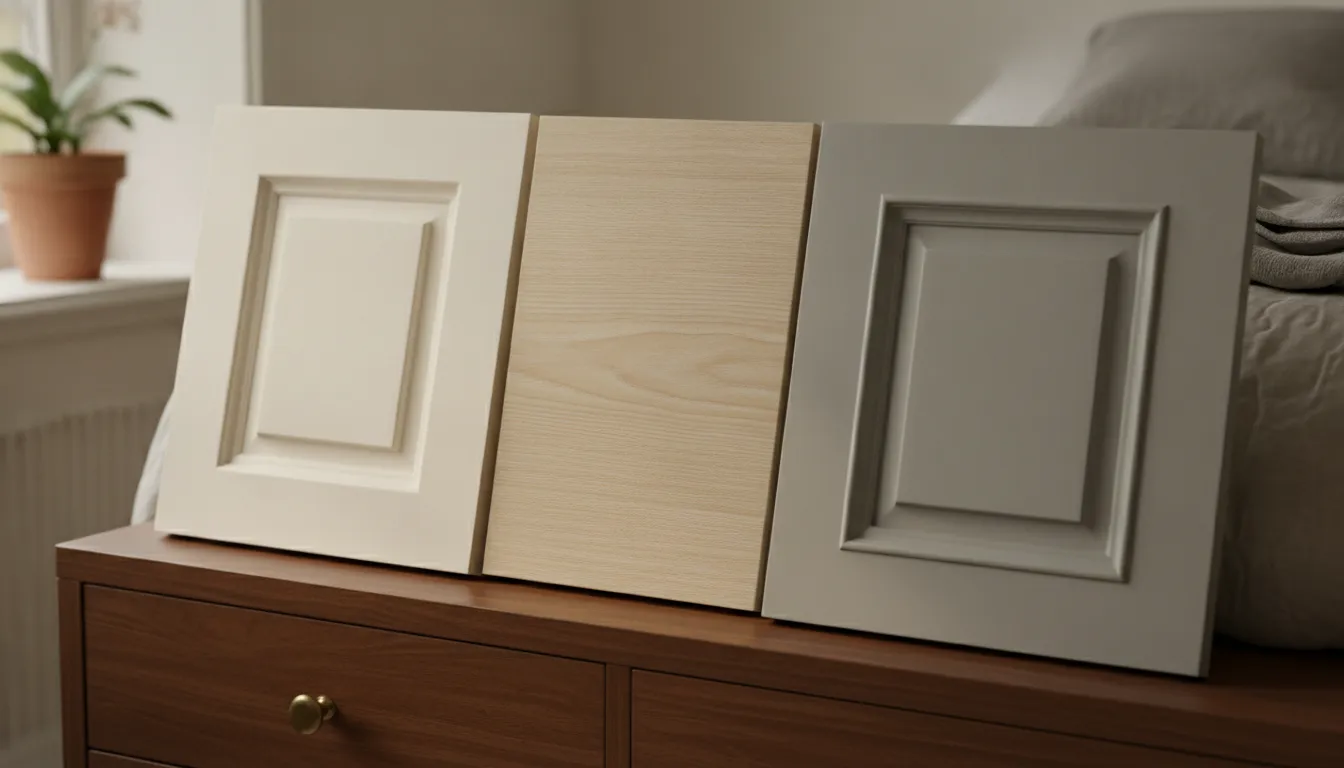
Group finishes by the job they do, then look up the exact names in the catalog. Creative Closets builds with Organizers Direct finishes, and the color page groups styles under names such as White, Linen, Cloud, Drift, Tahoe, Ash, and darker options such as Licorice and Black. You do not need every name on the first pass. You need the family that fits the room.
| Finish family | Choose it when | Watch for |
|---|---|---|
| Soft white or antique white | The bedroom is light and you want the closet to recede. | A warm bulb can push white toward yellow. Compare it with the wall, not with a phone screen. |
| Greige, linen, or cloud | Floors or furniture are warm and a stark white would look cold. | These shift with light. A sample that looks beige at noon can look gray at night. |
| Light wood tone | You want grain, and the floor or furniture already has wood. | Two wood tones that are close but not related can look accidental. Pick a clear contrast or a close cousin. |
| Deep neutral or black | The closet is seen from the room and you want it to read as furniture. | Dust, fingerprints, and a small room. Keep the door style simple so the dark finish does not add heavy shadow lines. |
Use the table to cut the catalog in half. If the bedroom is already full of warm wood, start with linen, a light wood tone, or a soft white, and skip the cool grays until you have seen a sample in the room. If the closet is mostly hidden behind a bedroom door, a quiet white or greige is usually enough. Save a stronger finish for the closet people see.
Do not try to match a paint chip exactly. Cabinet finishes and wall paint are different materials, and a perfect match on day one often looks off after the paint fades. A finish that is a step lighter or a step warmer than the wall is easier to live with. The published guide on matching finishes without matching everything covers how that works across a whole house. This choice is only the closet.
How does door style change the finish?
Color and door style are one decision. A flat door shows the finish as a clean field. A shaker or raised panel adds a shadow line, so the same color looks busier and, in a small closet, heavier. If you love a detailed door, a quieter color keeps the closet from shouting. If you love a deep color, a simpler door keeps the shadow from stacking on the color.
The catalog repeats a handful of profiles across many colors: flat panel, shaker, slim shaker, reeded slim shaker, raised panel, pillowtop, and modern one-piece styles. You do not need to compare every profile. Pick the amount of detail you want, then confirm that profile exists in the color family you already chose.
- Decide whether the closet should recede or read as furniture.
- Pick a finish family that agrees with the floor and the walls.
- Choose a simple or a detailed door, not both at full strength.
- Confirm that door exists in that finish on the color page.
- Bring the sample, not a screenshot, into the closet.
A reeded or pillowtop door catches light along the edge. That can look sharp in a bright walk-in and fussy in a dim reach-in. A flat or slim shaker door is the safer pair with a dark finish or with a closet that already has a lot of hardware. Look at reach-in closet systems if most of what you see is the door itself. In that case the profile matters more than it does in an open walk-in.
Should the hardware match the closet finish?
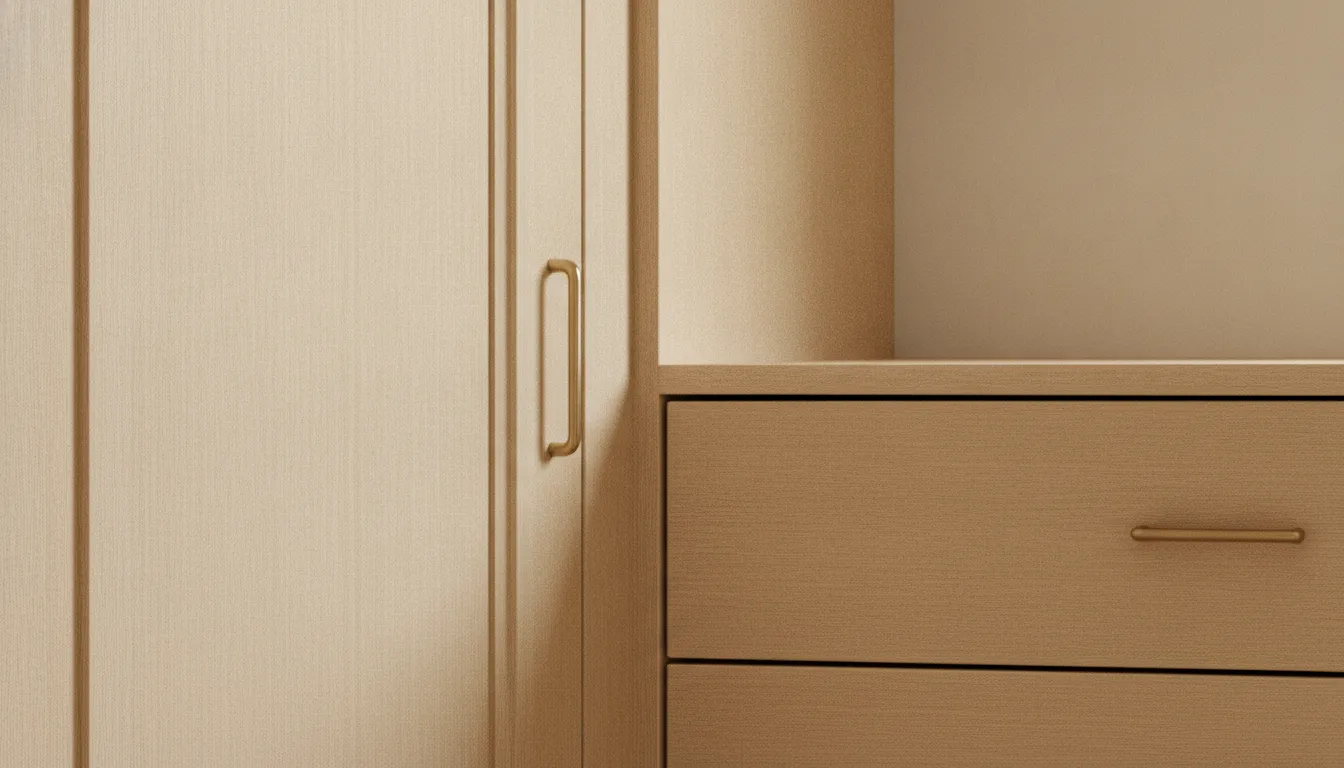
Hardware is a small surface with a loud effect. A warm gold pull on a cool gray door reads as a contrast on purpose. The same pull on a warm linen door reads as part of the finish. Choose the relationship first: match the warmth, or contrast it. Trying to match a metal to a cabinet color exactly is usually a waste of time, because metal and a printed or laminated finish do not share a pigment.
Creative Closets offers pulls and accessories in finishes such as matte nickel, matte gold, graphite, chrome, brushed chrome, and oil-rubbed bronze. The full set lives on the closet hardware page. For the finish decision, you only need to know which metal you will actually touch. A dark door with a dark pull can disappear. A light door with a bright chrome pull can look busier than the door style you chose.
Keep the metal consistent inside one closet. Mixing gold and nickel in the same run rarely looks planned unless one of them is confined to a single feature, such as a jewelry insert. If the bedroom already has a metal on the lamps or the dresser pulls, start there. The closet does not have to copy it, but it should not introduce a third metal without a reason.
How many finishes belong in one closet?
One finish is the easiest choice, and it is the right one when the closet is small or the door style is already detailed. Two finishes work when they split a job: a quieter color on the tall doors, and a second color on the drawers or the island, so the eye has a place to rest. Three finishes in one closet usually means three ideas, and the room looks unfinished even when the installation is precise.
If you use two, make the split obvious. Tall cabinets in a warm greige and drawer fronts in white is a split people can read. The same two colors used in a checkerboard of doors is not. Keep the second finish to one horizontal band or one freestanding piece. The closet design gallery is useful here for seeing how a second finish is grouped, not for copying a whole room.
Open shelving and hanging do not count as a second finish, but they change how much color you see. A closet that is half open can carry a stronger door color because clothing breaks it up. A closet that is all doors needs the calmer choice, or a very simple door, or both. Kids’ rooms are the exception people overthink. A kids’ closet can take a brighter accent, but the boxes, shelves, and tall doors should still share one main finish so the room can change later.
What wears well after the first year?
The finish you like on installation day is not the only test. Closet doors see hands, hangers, and the occasional suitcase. Light solid colors hide less dust contrast than people expect, and very dark colors show lint. A soft neutral in the middle is often the least demanding. Wood grain hides small marks better than a perfectly even light field, which is one reason a light wood tone stays popular in busy rooms.
Creative Closets builds these systems in thermally fused laminate and backs the work with a lifetime guarantee on materials and workmanship. The material guide explains why that surface is used and how it cleans. You do not need to re-decide the construction in order to pick a color. You do need to know the finish is a sealed surface, so the choice is about light and the room, not about staining a raw wood door.
Also think about what you store against the doors. A closet full of dark coats will make a white interior feel brighter, which is usually helpful. A closet full of white shirts will make a cream finish look more yellow. Hold a garment you wear often next to the sample. If the shirt looks dingy, the finish is the thing that shifted, not the shirt.
Read what the closets are made of if you want the construction detail, and the lifetime guarantee if you want the coverage in writing. Neither page will pick the color. They only tell you the finish is meant to stay.
What should you bring to the design visit?
Bring a short list, not a mood board of twenty photos. Two finish families and one door direction are enough. A useful note says: linen or a light wood tone, slim shaker, metal that is warm rather than chrome. The designer can check which of those exist together and which samples to hold in the closet. A note that says “something modern” does not give them a place to start.
Photograph the fixed finishes in daylight and with the closet light on. Include the floor, the wall, and one piece of furniture that will stay. Screens shift color, so use the photos as a reminder of what is in the room, and use the physical sample as the decision. If you have a paint color you are keeping, bring the chip or the can name.
- Two finish families, with the one you would keep if you had to choose today.
- One door direction: simple, or detailed.
- The metal warmth you want, matched or contrasted with the door.
- Photos of the floor, walls, and anything you will not replace.
- A garment you wear often, to hold next to the sample.
Creative Closets designs the closet in the home and can install it in a day once the plan is set. The design and installation process explains that sequence. Arriving with the finish already narrowed is what keeps the visit on layout and price instead of on a long tour of every color name.
If the closet is one piece of a larger storage plan, say so. A wardrobe, a laundry cabinet, and a closet that share a hallway should share a finish family even when the door styles differ. Wardrobe closets and the closet in the bedroom do not need identical doors. They do need to look like they were chosen on the same day.
Schedule a visit to compare samples
Frequently Asked Questions
Do I need to match the closet to my wall paint?
No. A finish a step lighter or warmer than the wall usually looks more intentional than an exact match. Paint and cabinet surfaces age differently, so a perfect match on day one often looks off later.
Can I use two colors in one closet?
Yes, if the split is obvious. Use the second color on one band of drawers or on one freestanding piece. Avoid scattering two colors across alternating doors.
Which door style is easiest with a dark finish?
A flat or slim shaker door. Dark color already adds visual weight, and a heavy raised panel adds another shadow line. Save detailed doors for lighter finishes.
Should I choose the color before the layout?
Choose the layout far enough to know how much of the closet is door and how much is open. Then choose the finish. A closet that is all doors needs a calmer color than a closet that is half open.
Look at the light, name the finishes you cannot change, and bring two custom closet finish colors to the visit. The catalog is there to confirm the sample, not to make the decision for you.