

Closet lighting ideas are most useful when they make a real routine easier: finding a shirt before work, seeing the back of a shelf, opening a drawer without blocking the light, or checking accessories before leaving home. The best plan matches illumination to the storage layout, then layers ambient, task, and accent lighting around the way the closet is used.
Schedule your free in-home design consultation.
What Should Closet Lighting Help You Do?
A bright closet is not automatically an easy closet to use. A single ceiling fixture can leave hanging clothes in shadow, make the back of a deep shelf hard to see, or create glare when you open a drawer. Lighting should support the actions that happen in each zone, not simply add more brightness to the room.
Before choosing fixtures, consider the moments that currently slow you down:
- Choosing clothes: Light should reach the fronts and sides of hanging garments so colors and textures are easier to distinguish.
- Reaching shelves: Illumination should reach the shelf surface and the items toward the back, especially on taller or deeper sections.
- Opening drawers: The light source should remain useful when a drawer is extended and your body is standing in front of it.
- Finding accessories: Jewelry, belts, handbags, and other small items benefit from focused light rather than a dim corner.
- Moving through the space: Walkways, doors, and seating areas need comfortable general visibility without harsh glare.
This routine-first approach also helps you decide what not to light. A display area that looks beautiful but does not improve access may be less valuable than a discreet light at a drawer bank or shoe shelf.
How Do You Match Lighting to Daily Closet Routines?
Think of the closet as a series of work zones. The person using the space may move from hanging clothes to folded storage, then to drawers, shoes, or a mirror. Each transition creates a visibility need. Planning those needs in order produces a more comfortable result than placing fixtures wherever a ceiling box or outlet happens to be available.
Plan for the morning rush
If the closet is used early in the day, avoid a layout that requires one harsh light to illuminate every surface at once. A soft general layer can make the room easy to enter, while focused light at hanging sections and drawers helps you make decisions without searching through shadows. Controls should be easy to reach as you enter, and sensors can be considered where they fit the home’s electrical plan.
Plan for slower evening routines
Evening use often calls for a calmer light level. A well-designed system can keep the room comfortable while still making shelves, drawers, and accessories visible. Diffused sources and concealed placement can reduce direct glare in mirrors or glossy finishes. If the closet is next to a bedroom, the control plan should also consider how much light spills into adjacent spaces.
Plan for changing storage needs
Closets change as wardrobes, work schedules, and routines change. Adjustable shelving and movable components make it easier to revise storage zones, but the lighting plan should leave those zones useful as well. During design, identify the areas that may change and avoid placing a fixture where a future shelf, rod, or drawer would block its output.
Which Closet Lighting Ideas Work in Each Storage Zone?
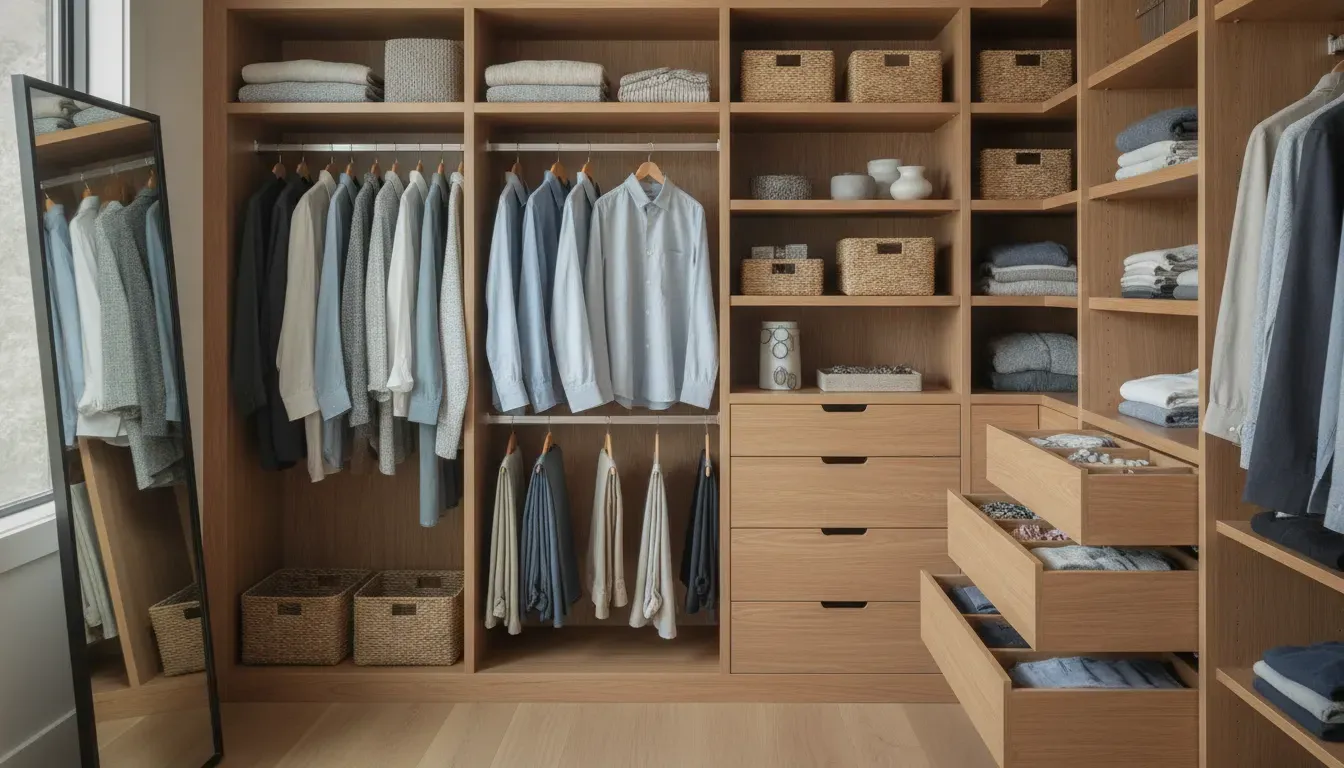
Different storage components create different shadows. A rod full of clothing can block light from reaching the back wall. A deep shelf can hide items below its front edge. A drawer can shade the space behind it when opened. Use each zone’s function to guide the placement and direction of light.
Hanging sections
Hanging clothes are easier to scan when light reaches the garment fronts rather than stopping at the top of the rod. Keep fixtures far enough forward to avoid a dark band under the shelf above, but not so exposed that they create glare at eye level. A concealed or low-profile source can keep the storage face clean while improving visibility.
Shelves and cubbies
Open shelves need light that reaches their usable depth. Light near the front edge can help illuminate folded clothes, shoes, and baskets without requiring a bright fixture across the whole room. Vertical lighting can be useful at tall shelving or narrow compartments where a ceiling fixture leaves the sides dim.
Drawers and accessory storage
Small accessories are difficult to sort when their storage is deep or divided. Place focused illumination where you stand while opening drawers, not only above the center of the room. Jewelry organizers, belt racks, handbag shelves, and valet areas may each need a different angle. The goal is to see the contents quickly without turning every compartment into a display.
Shoe storage and lower sections
Lower shelves are often the first areas to disappear into shadow. A low, diffused source or carefully directed vertical light can make shoes and folded items easier to identify. Keep the pathway clear, and avoid placing a fixture where it could be kicked, snagged, or blocked by a door.
Mirrors and dressing areas
A mirror needs balanced light rather than a single source directly above the head. Lighting from the sides or from a diffused surround can reduce strong facial shadows and make the area more comfortable to use. Coordinate the mirror, seating, drawers, and power plan together so the dressing zone does not become an afterthought.
How Should You Layer Closet Lighting?
Layered lighting gives each source a job. It does not mean adding fixtures everywhere. It means combining a comfortable baseline with targeted illumination and, where appropriate, a finishing layer that highlights a feature without competing with the storage system.
Start with ambient light
Ambient light establishes the overall level for entering the room, walking through it, and seeing the main layout. In a walk-in closet, it should cover the floor and circulation paths without being blocked by an island, upper cabinets, or tall hanging sections. In a reach-in closet, it should support a clear sightline from the doorway across the storage face.
Add task light where decisions happen
Task lighting belongs near the places where you choose, reach, sort, and compare. That may include a hanging section, a drawer bank, a shoe shelf, or a vanity. Light should be directed toward the working surface or storage face, with diffusion used to soften reflections and avoid a bright line in your field of view.
Use accent light selectively
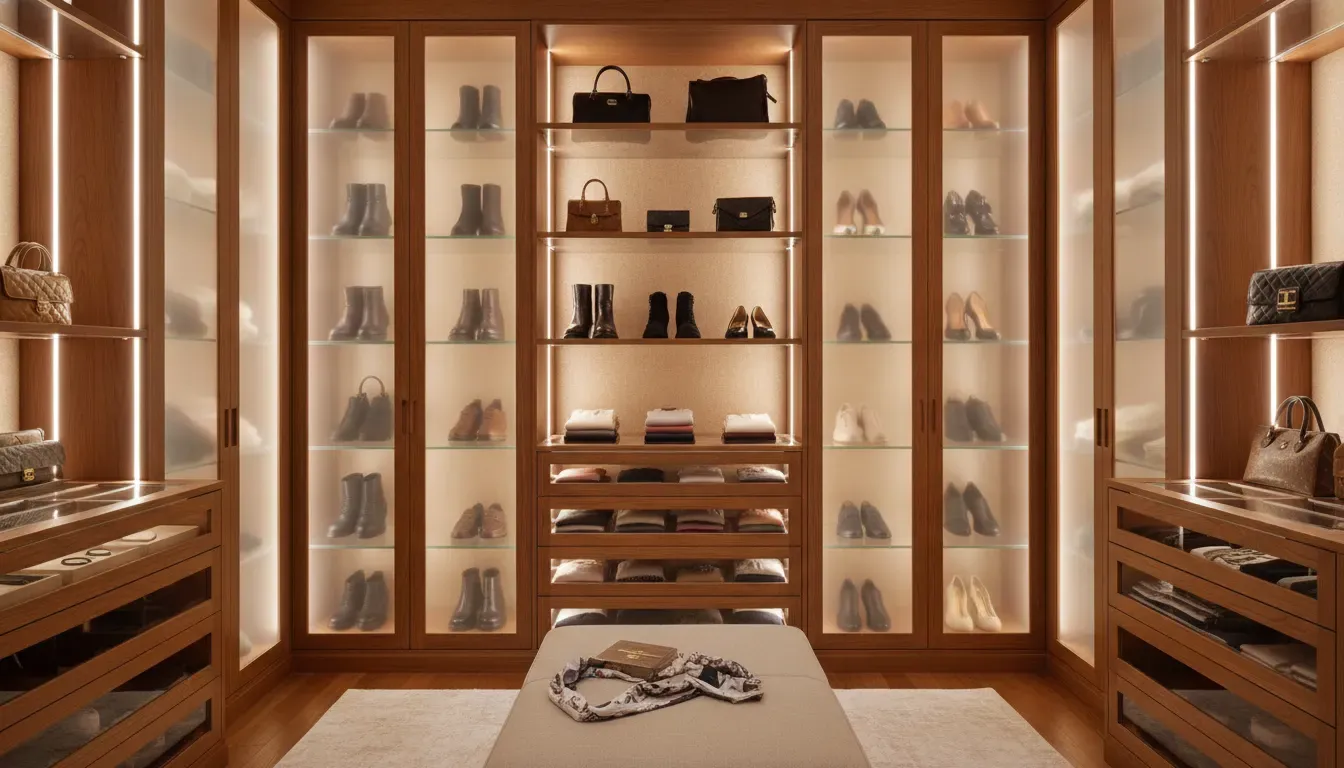
Accent light can give a display shelf, glass-front cabinet, or architectural detail a finished feel. It should remain secondary to access and visibility. If a decorative glow creates glare, makes a garment harder to identify, or adds heat to a confined compartment, it is not helping the routine. Start with function, then add visual emphasis where it makes sense.
Talk through your closet lighting plan with a storage designer.
What Changes for Reach-In and Walk-In Closets?
The right closet lighting ideas depend on the room’s footprint and sightlines. A reach-in closet is usually viewed from one primary position, while a walk-in closet has several paths, corners, and storage faces. Both benefit from layered planning, but the priorities are different.
Reach-in closets need a clear front-to-back view
In a reach-in, the doorway and front storage face do most of the visual work. Lighting should help you see the entire run of hanging clothes and shelves without being blocked by the person standing in front of the closet. Vertical planning matters because upper shelves can shade lower rods, and a single center light may leave the ends of the system dim.
Walk-in closets need coordinated zones
A walk-in can include multiple hanging walls, an island, a mirror, drawers, shoes, and a seating area. Treat those as connected but distinct zones. General light supports movement, while task sources help at the island, drawers, and hanging areas. The design should also preserve comfortable aisles and keep doors from opening into a fixture or creating a glare point.
Creative Closets already has a dedicated guide to walk-in closet lighting ideas for homeowners planning that specific room type. This guide takes a broader view by focusing on the daily routines and storage decisions that apply to both walk-in and reach-in closets.
How Do You Plan Lighting With Custom Storage?
Lighting is easiest to integrate when it is discussed at the same time as the storage layout. The location of shelves, rods, drawers, doors, and panels affects where light can travel. A design conversation can also identify which components need illumination, which areas should remain visually quiet, and where an electrician may need to plan power or controls.
During a custom design consultation, walk through the closet as you would use it. Point out the first item you reach for, the shelf that is hard to see, the drawer where small accessories disappear, and the corner that feels dark. Those observations give the designer a practical brief rather than a list of decorative fixtures.
Creative Closets brings an in-home showroom and design process to homeowners in King and Pierce Counties. A designer can measure the space, discuss storage priorities, create a 3D layout, and review options during the appointment. If new wiring or electrical work is needed, coordinate that portion with a qualified electrician and the home’s applicable requirements.
What Should You Check Before Choosing Fixtures?
A fixture can look right in a product photo and still be wrong for the closet. Review the entire storage plan before selecting the final lighting approach. These questions help keep the decision practical:
- Where will the light land? Check whether shelves, doors, clothing, or an island will block it.
- Where will you stand? The light should work from the normal position used to choose clothes or open storage.
- Will the source create glare? Consider mirrors, glass, glossy finishes, and sightlines from the bedroom or hallway.
- Can you reach the controls? Switches and sensors should match the entry path and the home’s electrical plan.
- Will the layout change? Leave flexibility around adjustable shelves, movable rods, and future storage accessories.
- Is the light comfortable? Aim for even, diffused visibility instead of the brightest possible point source.
- Is the installation safe? Have a qualified professional address new wiring, connections, and code questions.
It also helps to choose storage components that work with the lighting plan. Custom closet shelving can be arranged around the depth and reach of the space, while closet accessories can give smaller items a defined location that is easier to illuminate.
Why Does Storage Layout Matter as Much as the Fixture?
Lighting cannot solve every visibility problem by itself. A shelf that is too deep, a rod placed behind a bulky fascia, or an accessory zone hidden around a corner may remain difficult to use even with a brighter bulb. The storage layout determines what the light can reach and what your body can comfortably access.
Start by organizing the closet into useful categories. Frequently used clothes and accessories should be easy to see and reach. Seasonal items can occupy higher or less accessible areas. Drawers can contain smaller pieces, while open shelves can keep daily items visible. Once the storage hierarchy is clear, the lighting plan can reinforce it instead of trying to illuminate every surface equally.
For a broader look at how rods, shelves, drawers, cubbies, shoes, and lighting work together, see these closet storage solutions. The goal is a system that feels natural to use, not a room full of disconnected features.
How Can Homeowners in King and Pierce Counties Get Started?
Bring a short list of frustrations to the design conversation. You might note that the back of a shelf is dark, a drawer blocks the ceiling light, or clothing colors are difficult to distinguish. Photos of the existing space can help, but the most useful information is how you move through the closet and what you reach for every day.
Creative Closets serves homeowners throughout King and Pierce Counties, including communities such as Maple Valley, Bellevue, Renton, Issaquah, Sammamish, Auburn, and surrounding areas. The in-home consultation is a chance to review the room’s measurements, storage needs, lighting priorities, finishes, and accessories together. Visit the in-home showroom experience page to learn more about the design approach.
Ready to Plan Closet Lighting Around Your Routine?
The most successful closet lighting ideas begin with the routine, then connect the lighting to the storage layout. When shelves, rods, drawers, accessories, controls, and pathways are considered together, the finished closet can be easier to use every morning and more comfortable at the end of the day.
Schedule your free in-home design consultation.
Closet Lighting Ideas FAQ
What is the best type of lighting for a closet?
There is no single best fixture for every closet. A layered plan usually works well: comfortable ambient light for the room, focused task light for shelves and drawers, and optional accent light for selected displays. The right combination depends on the closet’s size, storage depth, sightlines, and routine.
How do I stop closet shelves from creating shadows?
Plan light near the usable front edge of the shelf or use a carefully directed vertical source so the shelf surface and stored items receive light. Avoid relying only on a ceiling fixture behind or above a deep shelf. Diffusion can also soften glare while keeping the storage face visible.
Should closet lighting be planned before the shelving is installed?
Yes. Planning lighting with the shelving makes it easier to coordinate placement, controls, wiring, doors, and future adjustable components. It also reduces the risk that a rod, shelf, or cabinet will block the light after installation.
Can lighting be added to a reach-in closet?
Reach-in closets can often benefit from a more deliberate lighting plan. The focus is usually on a clear view across the storage face, useful light at shelves and drawers, and controls that work from the doorway. Any new electrical work should be reviewed with a qualified electrician.
How can a custom closet designer help with lighting?
A designer can connect lighting priorities to the placement of hanging sections, shelves, drawers, accessories, doors, and walkways. During an in-home consultation, you can describe the parts of the closet that are difficult to use and review a storage plan built around those routines.