

Built in closet ironing station ideas work best when the station is planned as part of the closet, not squeezed into whatever space remains. A useful setup gives you room to open the board, move around it, plug in the iron safely, and hang finished clothes without crossing the room. It also keeps the board and iron out of sight when the task is done. Before choosing a fold-down model or a dedicated cabinet, think through how you iron, what the closet can accommodate, and how the station will fit beside everyday storage.
Schedule an in-home closet design consultation
Where should an ironing station go in a closet?
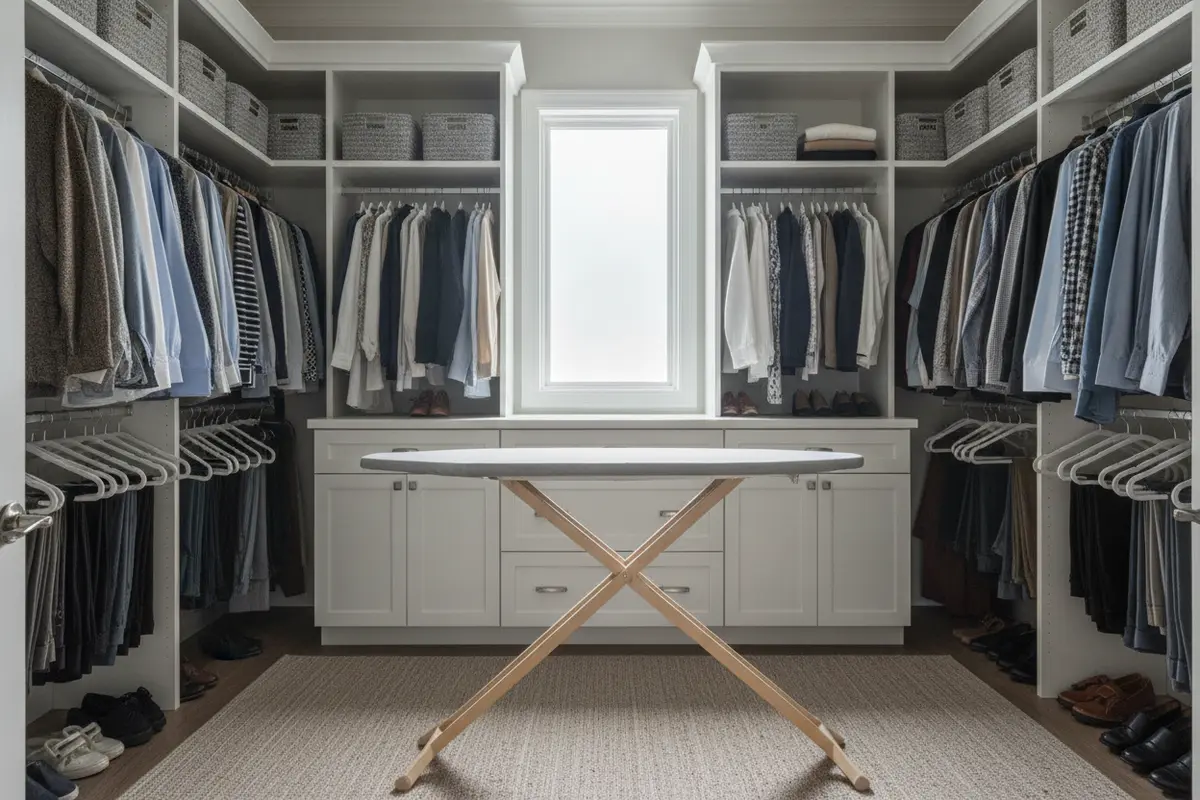
Start with the part of the closet where ironing would feel natural. A station near the clothing you wear most often can save steps, but it should not interrupt the main path through the room. A board that opens into a doorway, blocks drawers, or crowds a narrow aisle may look convenient on a plan and feel awkward every time you use it.
Look for a wall or cabinet run with enough depth for the closed unit and a clear zone in front for the board in its working position. In a walk-in closet, a short wall or an end panel may be a good candidate. In a reach-in closet, the station might fit in a narrow cabinet section, provided it does not take away too much room from hanging clothes. Review the room’s layout and storage zones alongside custom closet system options before deciding where the ironing function belongs.
Measure the whole movement, not just the cabinet. Open the closet door or drawer you use most, extend the board, and imagine standing at its end. Would you still be able to reach the hanging space? Can another person pass through? Is there a clear place to set a basket? Those everyday motions are useful tests when comparing possible locations.
How much clearance does a fold-down board need?
The needed clearance depends on the board model, its mounting position, and the shape of the room. Use the manufacturer’s dimensions as the starting point. Then confirm the complete sweep of the board, including its widest point, and leave a comfortable standing area beyond the tip. A board can extend farther than expected, especially when mounted inside a cabinet or on a side wall.
For early planning, sketch the station in both its closed and open positions. Mark the door swing, drawer fronts, nearby shelves, and the route you use to enter and leave the closet. If you are considering a pull-out board, include the space needed to pull it fully forward and turn it into working position. A fold-down board needs room to descend and swing out without hitting a cabinet, door, or the person using it.
- Check the full extension. Measure from the mounting point to the end and widest edges of the open board.
- Keep the walkway usable. Make sure the open board does not turn the main aisle into a squeeze point.
- Test nearby storage. Open drawers, hamper doors, and closet doors while the board is extended.
- Plan for the user. Consider comfortable standing height and room to shift from side to side.
Clearance figures on a drawing are only a planning aid. The board manufacturer’s specifications, the actual room, and local electrical requirements matter more than a generic dimension. If the closet is compact, consider whether an ironing station that stores vertically or in a separate utility area will work better than a permanently mounted board.
Which surface and cabinet details should you consider?
Ironing involves a hot appliance, so the surrounding cabinet needs to suit the board system and the way it is used. Do not assume that an ordinary shelf, cabinet side, or finish is suitable as a resting place for a hot iron. Check the ironing-board and iron instructions, and choose a designated heat-resistant iron rest or storage accessory where the manufacturer calls for one. Keep hot surfaces away from clothing, paper, and other items that could be damaged.
Many built-in boards include a cover designed for ironing. The cover is not the same thing as a place to rest a hot iron. Confirm that replacement covers are available for the selected unit and that the board can be folded away only after it has cooled as directed. If you want a separate counter or shelf for sorting clothes, keep it distinct from the hot-iron resting area.
Cabinet construction and finish should also be considered. The board’s mounting hardware needs a stable, appropriate support. Ask how the unit attaches to the closet system and what clearances the product requires. Avoid placing delicate garments directly beside the working board, where they could brush against the iron or collect heat. For other accessories that keep daily items organized, see the options for closet accessories and add-ons.
How should you plan the outlet and cord?
Decide where the iron will plug in before finalizing the cabinet. An outlet that is too far away can leave a cord stretched across the walkway. One placed behind the board may be difficult to reach once the station is open. Consider the iron’s cord length, where the outlet sits, and how the cord can be routed without touching the board, snagging on hardware, or hanging where someone could catch it.
Do not route a cord through a cabinet opening or add an outlet to cabinetry without confirming that the arrangement is allowed and safely installed. Ask a qualified electrician to review outlet placement and applicable electrical requirements. Keep cords away from hot surfaces and moving parts, and unplug the iron when it is not in use, following its instructions. If the closet has no convenient outlet, include that question early in the project rather than assuming a convenient extension cord will solve it.
It can help to lay out the station on paper with the iron’s approximate position, outlet, cord path, and open board. Then compare that sketch with the electrical plan. If the iron must be plugged in only after the board is open, ensure the outlet remains accessible without reaching across the hot working surface.
What ventilation and safety details matter?
A closet is enclosed storage, but an ironing station should not trap a hot iron in a closed cabinet. Follow the iron manufacturer’s guidance on cooling, storage, and whether the appliance must be upright or set on a particular surface. Let the iron cool as directed before putting it away. Do not store it while hot in a drawer or enclosed cubby unless the product is expressly designed for that use.
Keep the area around the board clear while ironing. Garments, tissue paper, cleaning products, and hanging items should not drape over the iron or its hot plate. If steam is part of your routine, give the space a way to clear moisture rather than pressing in a tightly closed cabinet. Open the closet doors as needed, and avoid blocking any vents already present in the room or cabinet.
Ventilation needs vary with the appliance and the room. There is no one cabinet opening that fits every product. Use the iron’s instructions, the board-system specifications, and professional guidance for any built-in enclosure. If those requirements cannot be met in the proposed location, a portable board used in a more open area may be a better fit.
Where should the iron, board, and supplies go?
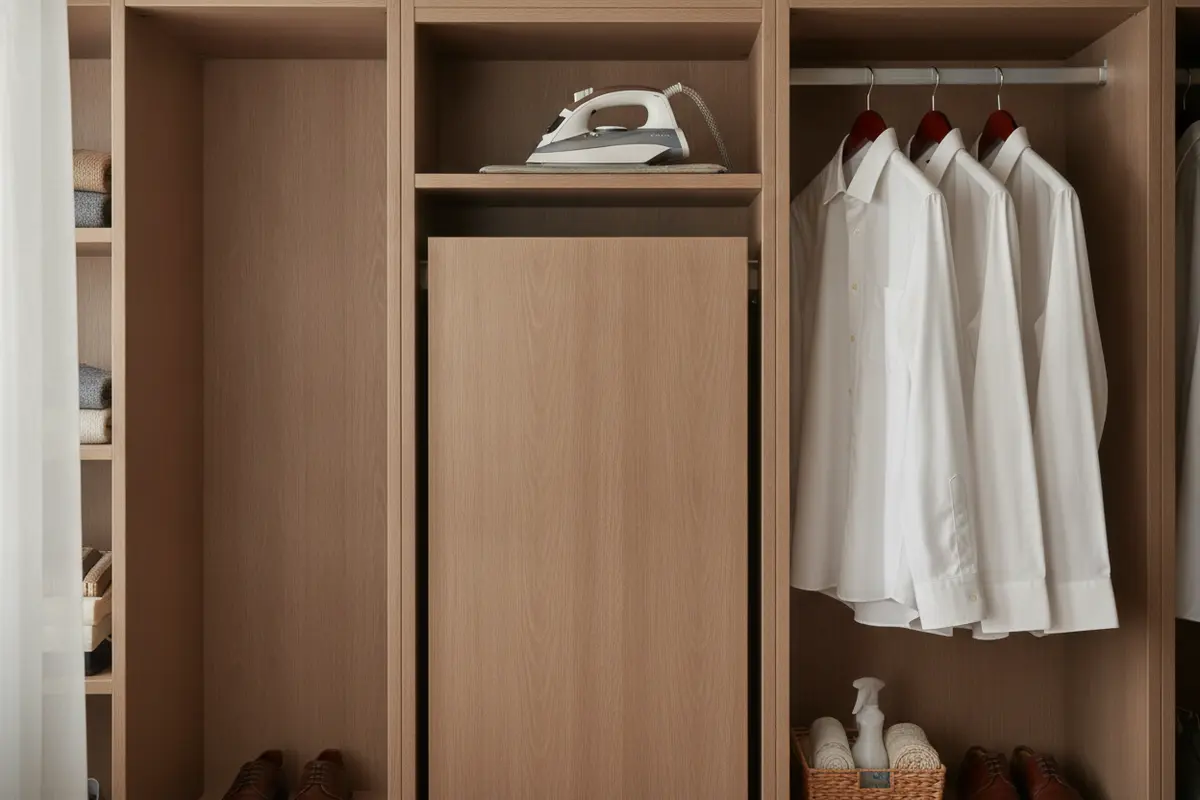
Storage should make the station easy to put away without creating a new clutter pocket. A fold-down board can be integrated into a cabinet door or a dedicated section, while a separate shelf or holder can keep the iron, spray bottle, and pressing cloth together. Choose storage based on the appliances and supplies you actually use, not on a long list of optional extras.
- Iron: Choose a stable location that follows the appliance’s cooling and storage directions.
- Board: Confirm how the board locks, folds, and stays secure when stored.
- Accessories: Reserve a small shelf or compartment for items used with the iron.
- Finished garments: Leave a short hanging section close enough to reach without leaning over the board.
- Used clothes: Decide whether a hamper or temporary sorting spot belongs nearby, but outside the working clearance.
A nearby rod is especially useful. It gives freshly pressed clothes a place to hang while you work on the next item. Match its height and length to the garments you plan to press, and avoid putting the rod where sleeves or hems can brush the hot board. If you are planning storage for a bedroom closet, use a broader layout plan such as this guide to a bedroom closet system.
Which ironing station layout fits your closet?
Compare the everyday trade-offs before choosing a configuration. These are planning types, not product specifications. Actual dimensions and installation requirements depend on the board and closet system selected.
| Station type | Works well when | Check before choosing |
|---|---|---|
| Fold-down cabinet board | You want the board stored in a dedicated, concealed section. | Open-board sweep, cabinet support, outlet access, and safe iron storage. |
| Pull-out board | You have a cabinet run where the board can slide forward into the room. | Full extension, stability, aisle clearance, and nearby drawer access. |
| Wall-mounted folding board | A clear wall is available and you do not need a full cabinet enclosure. | Mounting support, wall clearance, cord routing, and a nearby storage shelf. |
| Portable board with closet storage | You iron occasionally or the closet cannot provide the needed open clearance. | Where the board stores, where it opens, and whether an outlet is accessible. |
The best choice is the one you can open, use, cool, and put away without rearranging the closet each time. A built-in board may be a poor trade if it takes away the hanging space you need or makes the main aisle difficult to use. A portable board stored neatly in a closet can be more practical in a small room.
What should you decide before a custom design consultation?
A few decisions make it easier to discuss a station as part of the complete closet rather than as a stand-alone gadget. Bring the iron’s make and model if you have already chosen one, plus the product details for any board you are considering. If you have not selected either, say so; the layout can reserve space while you compare compatible products.
- How often do you iron, and which clothes do you usually press?
- Would you use a fold-down, pull-out, or portable board more comfortably?
- Where can the board open without blocking a doorway, drawers, or the closet aisle?
- How much hanging space do you want within easy reach of the board?
- Where is the nearest outlet, and should an electrician review another location?
- What does the iron manufacturer require for a safe resting place and storage after use?
- Do you want the iron, board, and accessories hidden, or simply grouped together?
- Is the station still useful if the closet’s storage priorities change later?
Bring rough room measurements, photos of the closet, and a list of items that must remain in the design. Include the door swing and any drawers or shelves you use every day. A designer can then consider the station beside hanging, folded, and accessory storage, and help identify trade-offs before the layout is set. If you want to understand how a complete system can be planned, explore custom closet systems and related ideas for closet lighting or adjustable shelves and rods.
Creative Closets brings the design discussion to your home, where the room’s clearances and daily routines are easier to consider together. For a project that includes more than one area, you can also review options for a custom laundry room if that is where you prefer to do most of your pressing.
Talk with a closet design expert about your layout
Frequently Asked Questions
Can an ironing board be built into a reach-in closet?
It may be possible if the chosen board fits the cabinet depth and can open into a clear area without blocking the closet’s main use. Check the unit’s dimensions and the room’s actual open-board clearance before committing. In some reach-in closets, a portable board or a separate location will preserve more useful storage.
Should I install an outlet inside the ironing cabinet?
Not automatically. Outlet placement depends on the appliance, cabinet design, and applicable electrical requirements. Ask a qualified electrician to review the proposed location, and make sure the outlet and cord remain accessible without crossing a hot surface or walkway.
Can I store the iron in the cabinet as soon as I finish?
Only follow the storage method and cooling time stated in the iron’s instructions. Do not close a hot iron inside an ordinary cabinet or drawer. Plan a separate, suitable storage spot and wait until the appliance is ready to be stored.
How can I keep pressed clothes close without crowding the board?
Reserve a short hanging section beside or near the station, outside the board’s open sweep. Check that clothes will not hang over the board or touch the iron. A small nearby rod can be more useful than adding a long run that reduces the closet’s primary storage.
A well-planned closet ironing station makes pressing easier while keeping the rest of the room functional. Confirm the board’s full clearance, safe appliance storage, outlet plan, and nearby hanging space before the cabinetry is finalized.